 2 hours ago
As my flight landed in Tel Aviv, I stood up to collect my bag from the overhead cabin. A middle-aged Indian woman with a warm smile caught my attention. She was travelling with another woman who looked remarkably similar. As we deboarded and made our way towards immigration, we struck up a conversation.
"Do you live in Israel?" she asked. "No, I'm here on a work trip," I replied. "I live here for work," she said.
The long queue at immigration gave us more time to talk. Her name was Reena. As I asked about her life in Israel, I learnt that she was from Manipur and had been working as a caregiver in Israel for the past three years. During that time, she had witnessed the aftermath of the October 2023 Hamas attack, Israel's military operations in Gaza and the country's confrontations with Iran.
While Reena works with a family in Tel Aviv, her sister Poonam is employed as a caregiver in the southern Israeli city of Ashdod. I asked Reena whether she had been in Israel during the Iranian missile attacks. She nodded and said she had seen it all.
I, too, was in Israel during the 12-day Iran-Israel conflict in June 2025, when sirens wailed across the country and residents rushed repeatedly into bomb shelters. I was there to report on the war. But unlike journalists who eventually leave, thousands of Indian workers such as Reena and Poonam found themselves living through the conflict while trying to earn a livelihood.
During the hostilities, the Indian Embassy organised evacuation efforts to bring citizens home safely. Thousands returned to India, but many chose to stay back. Reena and Poonam were among them. The sisters had recently spent a month with their family in India and were now returning to Israel after their vacation.
Concerned about their safety, I asked whether they felt comfortable living nearly 3,500 miles away from home in a region repeatedly threatened by conflict. Their answer caught me off guard.
"Our home is in Manipur," they said. "The area where we live has witnessed periods of unrest and security restrictions in recent years. During our recent visit home, curfews had been imposed in parts of the region following fresh tensions."
The sisters explained that during their recent visit home, curfews were imposed in parts of Manipur following fresh violence.
"When we were on leave, there was a curfew around our area. We could hardly step out," one of them said. "Life has its own challenges in both places, though the situations are very different."
Like many Indian professionals and workers overseas, the sisters moved to Israel primarily for better employment opportunities and to support their family back home.
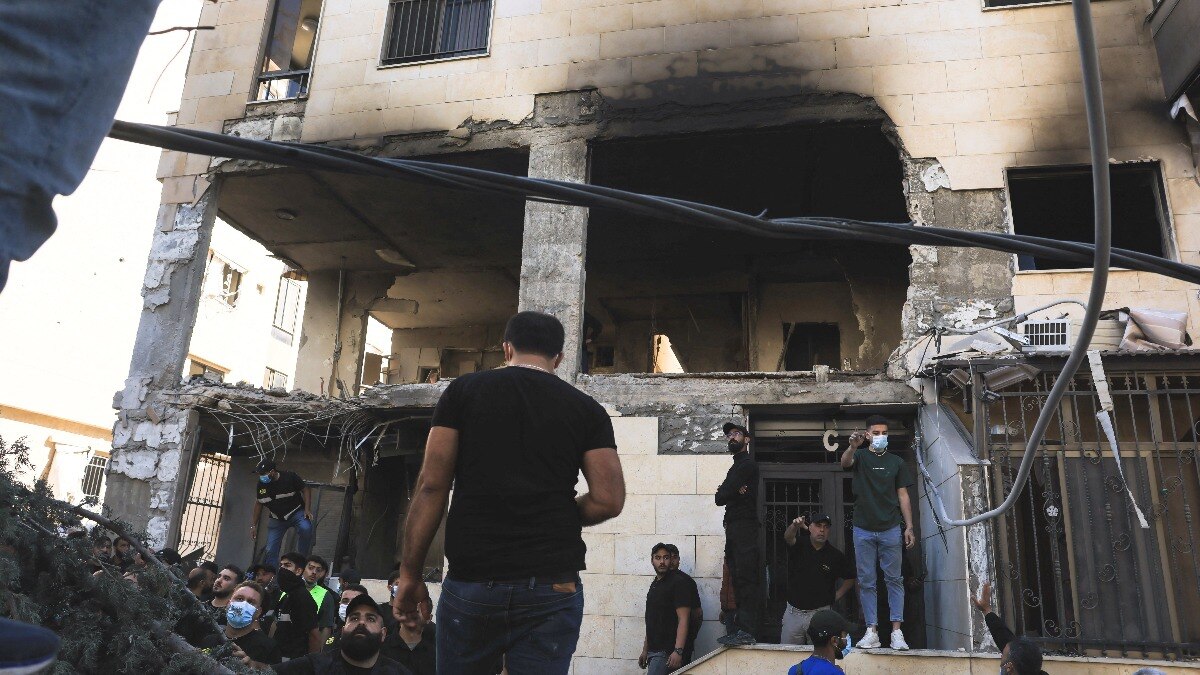
Poonam recalled the June 2025 conflict, when a missile struck a power station in Ashdod. She was working at a home roughly two kilometres away. "I immediately went to the underground bunker," she said.
She added that she has grown accustomed to Israel's warning systems and emergency protocols. Most modern buildings in the country are equipped with shelters and residents know how to respond when sirens sound.
Reena's experience in Tel Aviv has been similar. Despite living through multiple security crises, both sisters have continued working. Their earnings support their family back home, making it difficult to consider leaving their jobs.
As our conversation became more engaging, an immigration officer called my name. I wished the sisters well and said goodbye with a warm hug.
As I walked away, I couldn't stop thinking about their resilience. Their journey reflected the determination of thousands of Indians who leave home in search of better opportunities while adapting to unfamiliar circumstances far from their families.
More than two years into the conflict that began after the October 2023 Hamas attack, uncertainty continues to hang over Israel. Yet most Indian workers have chosen to remain. The wages are significantly better than what many can earn back home and Indians are generally well regarded in Israel, where strong diplomatic ties have fostered mutual trust and goodwill.
According to figures from the Ministry of External Affairs, more than 20,000 Indians currently work in Israel across sectors such as caregiving, construction, agriculture, information technology and software services. This year, India and Israel also signed an agreement aimed at facilitating the employment of an additional 50,000 Indian workers in the country.
As the wider Middle East conflict continues to affect countries around the world through energy market disruptions and economic uncertainty, Israelis themselves are grappling with inflation, anxiety and the lingering fear of renewed hostilities.
For workers like Reena and Poonam, peace is not an abstract geopolitical goal. It is a deeply personal wish.
Like thousands of Indians working overseas, they remain deeply connected to their roots and hope for stability, prosperity and peace for their families back home, while also wishing for calm to prevail in the region where they now work.
- Ends
Published By:
Prateek Chakraborty
Published On:
Jun 5, 2026 17:59 IST