 1 month ago
The blockade is a calculated attempt by President Donald Trump to squeeze Iran's economy at its core by cutting off oil exports, one of its last major sources of revenue and leverage.
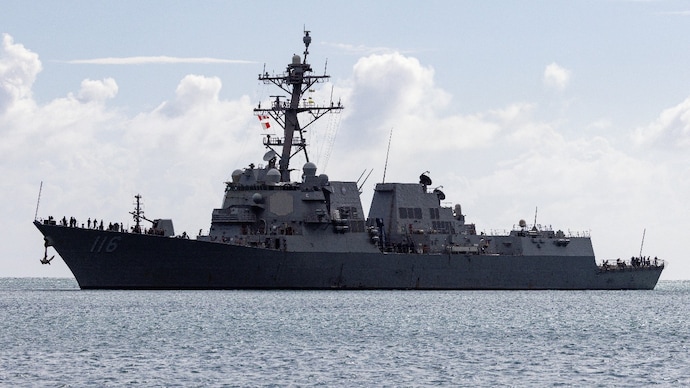
The US has imposed a high-risk blockade in the Strait of Hormuz after talks collapsed. (File Photo: Reuters)
The Strait of Hormuz, world’s most sensitive oil chokepoint, has now been pushed into military confrontation after the United States moved to cut off maritime lifeline following the collapse of fragile peace talks over the weekend in Islamabad. A plan that had long sat in military playbooks has now been put into motion, with US naval forces stepping into a complex and risky operation that could reshape the dynamics of the South Asia.
According to a report by The Wall Street Journal, American forces began enforcing a full blockade of vessels attempting to enter or leave Iranian ports on Monday, deploying more than 15 warships across strategic positions in and around the Strait of Hormuz. Rather than positioning ships too close to Iran’s coastline, which could expose them to attacks, the US Navy is focusing on intercepting vessels on either side of the strait. This allows forces to monitor and control maritime traffic while reducing immediate vulnerability.
Any ship suspected of breaching the blockade can be stopped by US warships for inspection. If a vessel refuses to cooperate, Marines and Navy SEALs can step in to board it by force, as per the report. These operations are supported by helicopters operating from aircraft carriers, destroyers and amphibious ships deployed across the region.
The US also relies on extensive surveillance systems, open-source tracking data and regional intelligence inputs to monitor vessel movements. In some cases, boarding teams can be flown in from nearby Gulf nations, further expanding operational reach.
A BLOCKADE WITH NO EASY EDGE
Despite the US Navy’s overwhelming strength, enforcing a blockade like this is far from simple. Officials and former commanders say it requires extensive resources, careful coordination and constant vigilance. If vessels are seized, the US would then have to find crews to operate them and secure places to hold them, adding another complexity to an already difficult operation.
Meanwhile, ships linked to Iran, especially those flying its flag, could try to test the blockade, possibly with backing from the Islamic Revolutionary Guard Corps, which still has fast attack boats and asymmetric naval capabilities in the region. The narrow geography of the Strait of Hormuz also complicates operations. With Iranian coastlines close by, US ships remain exposed to potential threats, including drones, naval mines and fast-attack boats.
WHY WASHINGTON TOOK THIS STEP NOW?
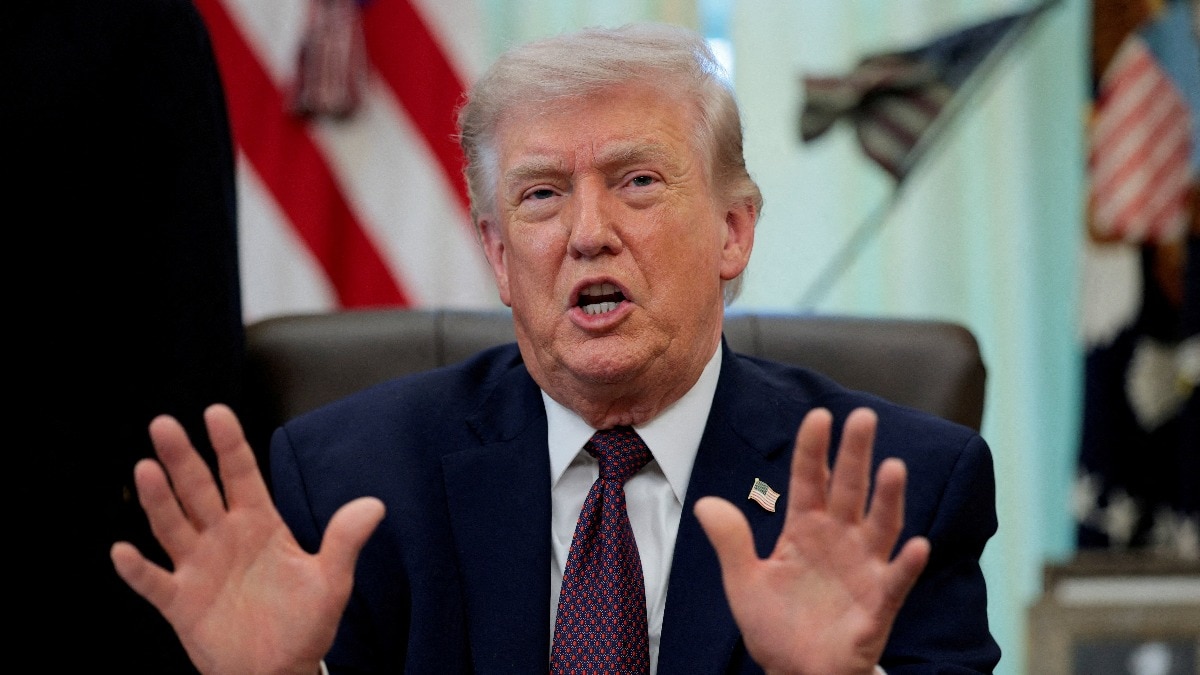
The blockade is a calculated attempt by President Donald Trump to squeeze Iran’s economy at its core by cutting off oil exports, one of its last major sources of revenue and leverage. "We can’t let a country blackmail or extort the world, because that’s what they’re doing," Trump said. "Iran is doing absolutely no business, and we’re going to keep it that way."
Washington is pushing for sweeping concessions from Iran, including ending uranium enrichment, handing over enriched nuclear material, and stopping support for regional armed groups. The talks broke down after Iran refused to abandon its nuclear programme.
The thinking in Washington is simple: keep the pressure steady, tighten the economic screws, and Tehran will eventually be forced back to the negotiating table. The idea of blocking the Strait of Hormuz has been around for years, sitting quietly as a fallback option in defence set-up. Detailed blueprints were drawn up and refined over time at US Central Command, ready for a moment like this.
The report says that US commanders have used similar tactics before to intercept Iranian weapons shipments in the region. But this time, the plan was pushed up the chain months ago and gained real urgency after the latest round of diplomacy collapsed.
WHY TRUMP HELD BACK UNTIL NOW?
Until now, the US had held back from executing such an action due to the high risks involved. A blockade of such a narrow and sensitive waterway could provoke immediate retaliation from Iran, including the seizure of tankers or mining of shipping lanes.
These actions carried the risk of a big surge in oil prices. The risks haven’t gone away. The blockade can still push up oil prices sharply and disrupt global trade. But Donald Trump appears to be banking on the impact being short-lived, with markets settling down before midterm elections in US.
HOW IRAN MAY RESPOND
Even though Iran’s military has taken a hit, it still has plenty of firepower left. It retains thousands of ballistic missiles, fast-attack boats and a range of asymmetric tactics that are well suited for this kind of confrontation.
Any direct clash -- whether it involves attacks on US ships or tensions during boarding operations -- could escalate quickly. There is also concern that Iran could widen the conflict by targeting ports and American infrastructure in neighbouring Gulf countries.
Iran’s Islamic Revolutionary Guard Corps (IRGC) has made it clear that it is still holding back much of its military strength, warning that more capabilities could be brought into play if the conflict continues.
IRGC spokesperson Hossein Mohebbi, quoted by Iranian media, said Iran has yet to fully reveal its potential, adding that "if the war continues, we will unveil capacities that the enemy has no conception of". He also claimed that Tehran could introduce more "modern" methods of warfare that the "enemy will have very limited ability" to counter.
TANKERS REVERSE COURSE AS RESTRICTIONS TAKE EFFECT
The impact of the US blockade was seen almost immediately. According to Al Jazeera, at least two oil tankers turning away from the Strait of Hormuz shortly after the restrictions came into force.
Tracking data from Marine Traffic showed vessels beginning to change course near the chokepoint. One of them, the 188-metre tanker Rich Starry, had left the Sharjah anchorage off the UAE coast and was headed towards China before reversing. Another tanker, the 175-metre Ostria, also turned back after approaching the Strait. The US Central Command (CENTCOM) had warned the Hormuz blockade will apply to all vessels entering or exiting Iranian ports.
This is no longer just about the US and Iran. The risks are already playing out as crude prices cross $100 per barrel in response to the unfolding crisis. Any longtime disruption in the Strait of Hormuz carries consequences for global energy flows, markets and countries far beyond the region.
- Ends
Published By:
Satyam Singh
Published On:
Apr 14, 2026 04:42 IST
Tune In