 1 month ago
Hezbollah urges displaced civilians to postpone return before ceasefire takes effect
Hezbollah has issued a statement calling on displaced Lebanese residents to delay returning to their homes in southern Lebanon, the Bekaa Valley and Beirut’s southern suburbs before the ceasefire comes into effect.
In the statement, carried by Lebanon’s News Agency, the group urged caution amid Israel’s history of “breaking covenants and agreements”.
With the announcement of the ceasefire, and in the face of a treacherous enemy that is accustomed to breaking covenants and agreements, we call on you to be patient and not to head to the targeted areas in the South, the Bekaa and the southern suburbs of Beirut, until the course of events becomes fully clear.
We understand the extent of your longing to return to your villages and homes, and we appreciate the patience and steadfastness you have shown to the whole world. However, out of concern for your safety and your precious lives, we call upon you to be patient and endure.
It echoes a similar message issued by the Lebanese army urging residents to “exercise restraint” following the announcement of the ceasefire agreement.
Key events Show key events only Please turn on JavaScript to use this feature
The day so far
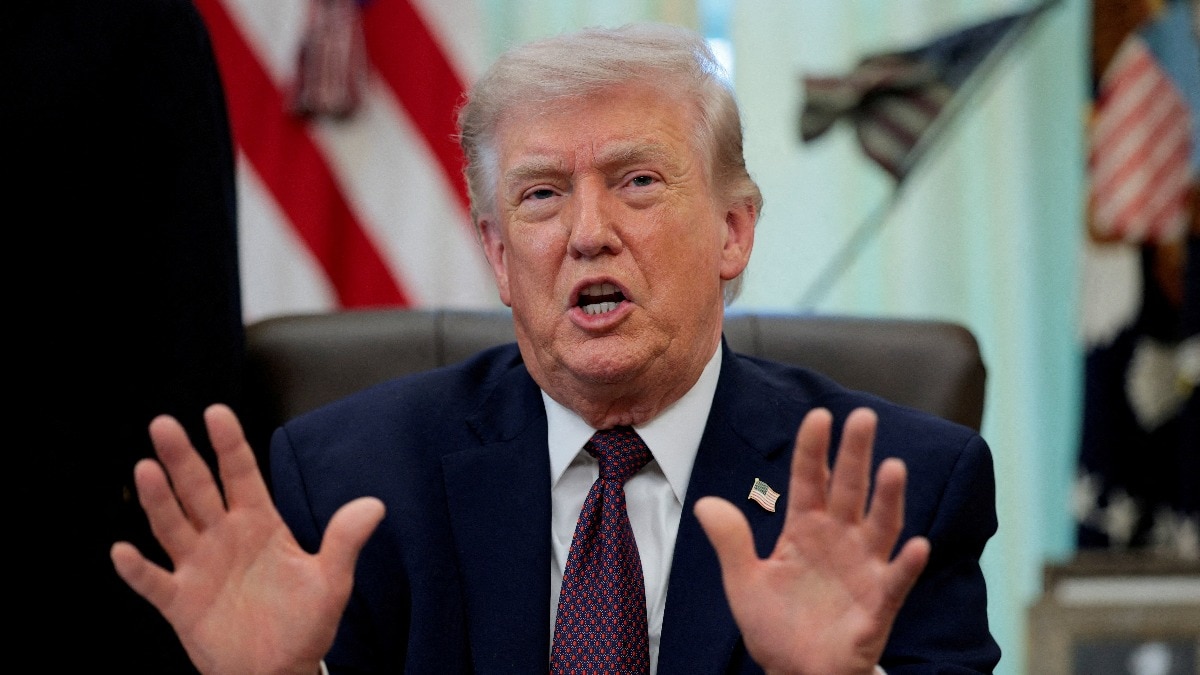
A 10-day ceasefire between Israel and Lebanon has come into effect, pausing fighting in a devastating conflict between Israel and Hezbollah that has killed more than 2,100 Lebanese people and displaced over 2.1 million. The agreement was announced earlier by Donald Trump, who said he had spoken with Israeli prime minister Benjamin Netanyahu and Lebanese president Joseph Aoun, and invited both leaders “for meaningful talks” at the White House. Both leaders welcomed the agreement. But how long the ceasefire will hold is the key question, as both Israel and Hezbollah have maintained their right to defend themselves if the truce is broken. Here’s our report.
Netanyahu called it a “historic” opportunity for peace, though he refused to withdraw his troops from southern Lebanon during the pause in fighting. “We are remaining in Lebanon in an expanded security zone,” Netanyahu said, due to the “danger of an invasion” and to prevent fire into Israel. “That is where we are, and we are not leaving,” he said. The Israeli PM maintained that his key demand was dismantling Hezbollah. He has previously declared his intention to occupy southern Lebanon up to the Litani River – about 18 miles from the border – while Lebanon demands the complete withdrawal of Israeli forces and for displaced residents to be able to return to their homes.
Iran’s foreign ministry spokesman Esmail Baghaei welcomed the ceasefire and stressed that it was already part of the original Iran-US agreement brokered by Pakistan. Baghaei said Iran emphasised “from the outset” the need for a “simultaneous ceasefire throughout the region, including Lebanon”, and expressed his “solidarity” with the people and government of Lebanon. He called for the return of displaced residents to their homes and emphasised the necessity of the “complete withdrawal” of Israeli forces from the south of the country – which, as I’ve said, Israel has refused to do.
The Lebanese army urged residents to “exercise restraint” in returning to their villages and towns in southern Lebanon ahead of the ceasefire coming into effect. The army added that even then residents should avoid areas that remain occupied by Israeli forces. It was followed by a similar statement issued by Hezbollah, urging caution amid Israel’s history of “breaking covenants and agreements”.
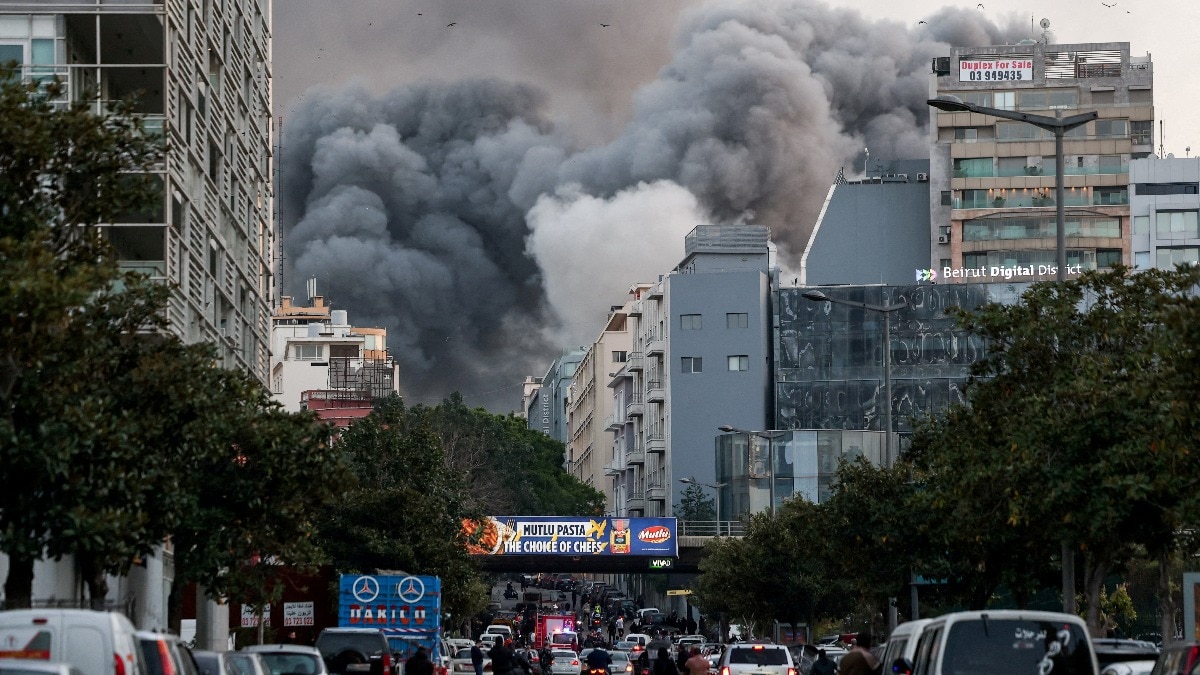
In the hours before the ceasefire took effect, Israel and Hezbollah continued to exchange fire. Just as the ceasefire came into force, the IDF said it had hit more than 380 Hezbollah targets in southern Lebanon in the last 24 hours, including rocket launchers, headquarters and Hezbollah members themselves. Meanwhile, Israeli strikes on Lebanese towns and villages killed dozens of people, including an attack on the town of Ghazieh which killed at least seven people and wounded 33, the health ministry said on Thursday.
Israel-Lebanon ceasefire begins
The 10-day ceasefire between Israel and Lebanon - announced earlier by Donald Trump - has now come into effect, pausing a devastating conflict that has displaced more than 1.2 million Lebanese people and killed over 2,100.
Israel’s prime minister Benjamin Netanyahu and Lebanon’s president Joseph Aoun reached the agreement after discussions with the US president, Trump said on Truth Social earlier. In a follow-up post, Trump said he had invited Aoun and Netanyahu to the White House for “meaningful talks”.
Aoun welcomed the agreement, while Netanyahu called it a “historic” opportunity for peace, though the Israeli PM has refused to withdraw his troops from southern Lebanon during the pause in fighting.
Israel and Hezbollah have continued to exchange fire in the hours leading up the ceasefire, with both parties maintaining their right to defend themselves if the truce is broken.
Iran welcomes ceasefire - but insists Israel must withdraw from Lebanon
Iran’s foreign ministry spokesman Esmail Baghaei has welcomed the ceasefire, according Iranian state media, and stressed that it was already part of the original Iran-US agreement brokered by Pakistan.
Baghaei said Iran emphasised “from the outset” the need for a “simultaneous ceasefire throughout the region, including Lebanon”, and expressed his “solidarity” with the people and government of Lebanon.
He called for the return of displaced residents to their homes and emphasised the necessity of the “complete withdrawal” of Israeli forces from the south of the country – something Israel has refused to do.
Baghaei also credited Pakistan’s efforts over the past 24 hours in securing the 10-day pause.
Hezbollah urges displaced civilians to postpone return before ceasefire takes effect
Hezbollah has issued a statement calling on displaced Lebanese residents to delay returning to their homes in southern Lebanon, the Bekaa Valley and Beirut’s southern suburbs before the ceasefire comes into effect.
In the statement, carried by Lebanon’s News Agency, the group urged caution amid Israel’s history of “breaking covenants and agreements”.
With the announcement of the ceasefire, and in the face of a treacherous enemy that is accustomed to breaking covenants and agreements, we call on you to be patient and not to head to the targeted areas in the South, the Bekaa and the southern suburbs of Beirut, until the course of events becomes fully clear.
We understand the extent of your longing to return to your villages and homes, and we appreciate the patience and steadfastness you have shown to the whole world. However, out of concern for your safety and your precious lives, we call upon you to be patient and endure.
It echoes a similar message issued by the Lebanese army urging residents to “exercise restraint” following the announcement of the ceasefire agreement.
We’re just under an hour out from the ceasefire going into effect at midnight local time, and the Israeli military has said it’s striking launchers from which Hezbollah launched rockets toward northern Israel.
The launchers fired rockets towards northern Israel “a short while ago”, the IDF said on Telegram. Minutes earlier, it said search and rescue forces were operating at sites in northern Israel “where reports of impacts have been received”.
Meanwhile, in the past few hours, Israeli forces have continued to strike Lebanon’s south, killing dozens of people.
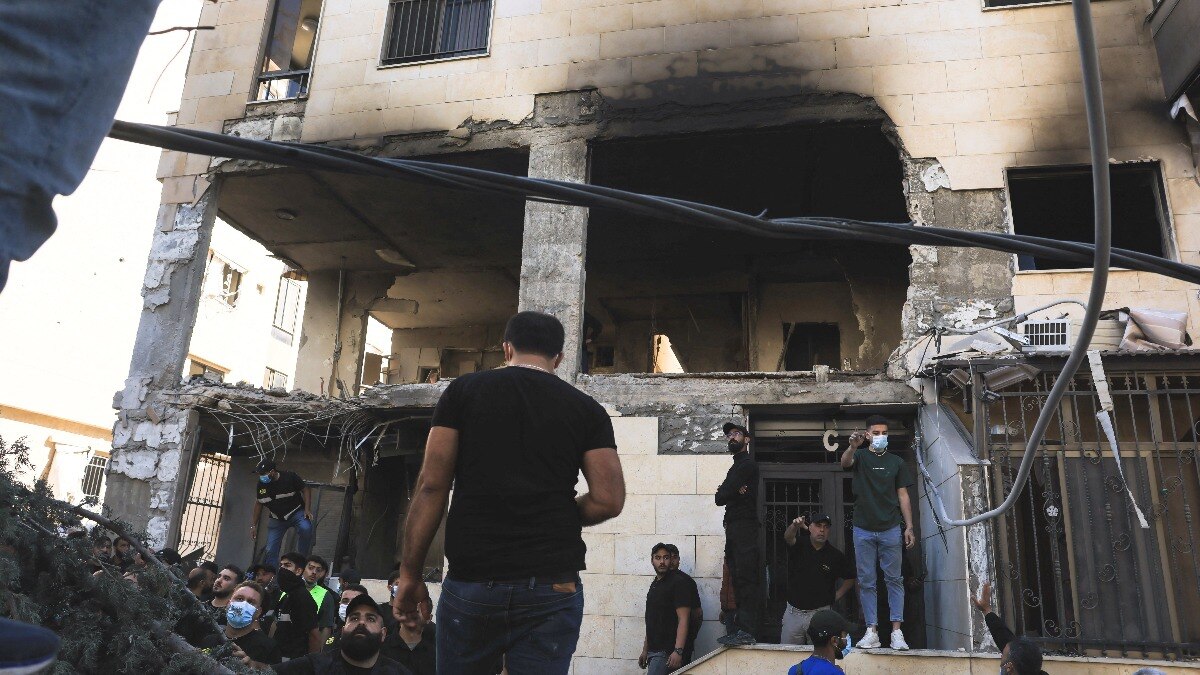
An Israeli strike on the southern Lebanese town of Ghazieh killed at least seven people and wounded 33, the health ministry said on Thursday, hours before the 10-day ceasefire is due to take effect.
Lebanese state media reported a “massacre against civilians” in the town, noting that rubble removal operations are ongoing, while the health ministry said its toll is “preliminary and not final”.
An Israeli air strike on the town of Adloun in the Sidon district killed three people and wounded 21 others. Israel also struck the town of Marjayoun, as well as the villages of Sajd and Hanaway, and the Burj Shemali Palestinian refugee camp.
Air raids were also reported in the Bint Jbeil district, which Israel had been attacking heavily in recent days, and several other towns, Al Jazeera reports.
Lebanese army urges caution in returning to southern Lebanon
The Lebanese army has urged residents to “exercise restraint” in returning to their villages and towns in southern Lebanon until the ceasefire agreement comes into force at midnight local time.
The army added that even then residents should avoid areas that remain occupied by Israeli forces.
The army also stressed the need for residents to follow instructions issued by deployed military units for their safety, and urged caution over potential unexploded ordnance and suspicious objects left behind from Israeli attacks, calling on residents to report them to the nearest military post.
Israel to preserve ‘right to self-defence’ in Lebanon under terms of ceasefire, says US state department
The US state department has issued an outline of the details of the ten-day ceasefire between Israel and Lebanon that will begin at 5pm EST on Thursday.
It says that both parties, having met for face-to-face talks in Washington this week, “affirm that the two countries are not at war and commit to engaging in good-faith direct negotiations, facilitated by the United States”.
The ceasefire is described as “a gesture of goodwill by the Government of Israel, intended to enable good-faith negotiations toward a permanent security and peace agreement between Israel and Lebanon”.
It also “may be extended by mutual agreement” if negotiations show signs of progress and as “Lebanon effectively demonstrates its ability to assert its sovereignty” (i.e. curb Hezbollah).
However, it reiterates Israel’s right “to take all necessary measures in self-defense, at any time, against planned, imminent, or ongoing attacks”.
Once the ceasefire begins, the Lebanese government, with international support, “will take meaningful steps to prevent Hezbollah and all other rogue non-state armed groups” in its country, it goes on.
All parties involved in the ceasefire recognise the “exclusive responsibility for Lebanon’s sovereignty and national defense”, it says.
And finally, it states that Israel and Lebanon have asked that the US “further direct negotiations between the two countries with the objective of resolving all remaining issues”, including the demarcation of borders and a long-term peace deal.
Donald Trump says he expects leaders from Israel and Lebanon in “four or five days”.
Trump spoke to both leaders as the ceasefire was announced. He said he was working on a longer term deal.
“It’s very exciting. I think we’re going to have a deal where we’re going to have a meeting, first time in 44 years, and Lebanon will be meeting with Israel, and they’re probably going to do it at the White House over the next week or two,” Trump said, as reported by Reuters.
Donald Trump: Nato has 'got themselves a problem'
US president Donald Trump has said that Nato has “got themselves a problem” for not being “there” for the United States.
While taking questions from reporters at the White House, Trump said: “We spend trillions and trillions of dollars on Nato, and when I ask them to get involved on a much smaller situation … they weren’t there for us … none of them. We were there [for] Ukraine … when they’ve had problems over the years we were there … I don’t think they’d be there for large problems and therefore I think they’ve got themselves a problem.”
Israeli troops will remain deployed to southern Lebanon amid the upcoming 10-day ceasefire with Hezbollah, and will act against any threat, the Times of Israel reports.
An official told the Ynet news site that “our forces will remain deep inside Lebanese territory”, and confirmed that the plan is to operate in a similar way to the November 2024 ceasefire agreement where IDF forces were permitted to strike if they believed any Hezbollah operatives were violating agreements.
The official said: “As in Gaza and as in Lebanon before Operation Roaring Lion, we will act not only against danger but also against an emerging threat and strike it immediately.”
The BBC reports that police in Pakistan have reportedly started to prepare for a visit by foreign delegations representing the US and Iran, however no official talks have been confirmed as of yet.
Traffic police in Islamabad have announced they will close all transport terminals in the city and neighbouring Rawalpindi for 10 days from 11pm tonight until 26 April. Heavy traffic is being banned from entering the city from 18 April, according to the outlet.
Trump says he would visit Lebanon 'at the right time'
US president Donald Trump has said he would visit Lebanon “at the right time”, and confirmed that a 10-day ceasefire between Israel and Lebanon starting on Thursday would include Iran-backed Hezbollah.
“Today they’re going to be having a ceasefire, and that’ll include Hezbollah,” Trump told reporters at the White House, adding, “at the right time I would visit Lebanon”.
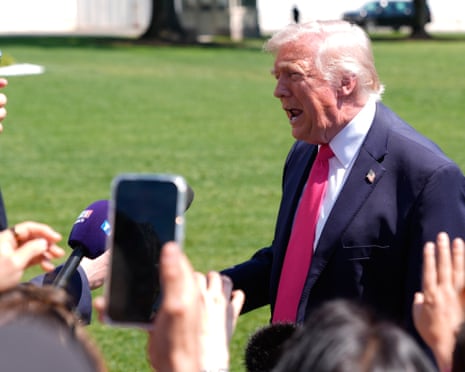
Trump also said it’s “very important” for Pope Leo to understand that Iran is a threat to the world. This comes as the pontiff and president are feuding over the United States’ war on Iran.
Earlier today, the pope used a speech in Cameroon to decry leaders who use religion to justify wars. He also criticised leaders who spend billions on wars. “They turn a blind eye to the fact that billions of dollars are spent on killing and devastation, yet the resources needed for healing, education and restoration are nowhere to be found.”
On Sunday, Donald Trump took aim at the pope and called him “weak on crime, and terrible for foreign policy” in a post on Truth Social. The US president’s comments have been widely condemned by Catholics and the international community, including Italian prime minister Giorgia Meloni.
When asked by reporters on Thursday if he would meet with the pope, Trump said: “I don’t think that’s necessary.”
Netanyahu confirms 10-day ceasefire - but says Israeli troops will remain in Lebanon
And Israeli prime minister Benjamin Netanyahu has finally confirmed that he has agreed to the 10-day cease-fire with Lebanon to try to advance a peace accord with between the two countries.
“We have the opportunity to make a historic deal with Lebanon,” Netanyahu said, welcoming the pause “in order to try to advance the agreement” discussed during diplomatic talks in Washington on Tuesday.
The Israeli leader maintained that his key demand is that Hezbollah must be dismantled.
But, crucially, he said he would not agree to Lebanon’s demand to withdraw from all Lebanese territory.
“We are remaining in Lebanon in an expanded security zone,” Netanyahu said, due to the “danger of an invasion” and to prevent fire into Israel.
“That is where we are, and we are not leaving,” he said.
Further to that last post, in a written statement, Hezbollah ally and speaker of Lebanon’s parliament Nabih Berri urged Lebanese people to “postpone their return to their towns and villages until the situation becomes clearer, in accordance with the ceasefire agreement.”
Hezbollah demands 'no freedom of movement for Israeli forces' during ceasefire and says Israeli invasion gives Lebanon 'right to resist'
A senior Hezbollah source has told Al Jazeera Arabic that any ceasefire must not allow Israeli forces unrestricted movement in Lebanon – and that as long as Israeli forces remain on Lebanese territory, the country retains the right to resist.
A ceasefire cannot include any freedom of movement for the enemy that would take us back to before March 2.
As long as the occupation remains on our land, Lebanon and its people have the right to resist by all means to force it to withdraw.
Trump announces Israel-Lebanon ceasefire – podcast
Donald Trump has said Israel and Lebanon will begin a 10-day ceasefire. In a post on Truth Social, he said he had spoken to the leaders of both countries today and claimed this would be the “tenth war” he has “solved”. Israel reportedly has no plans to withdraw its military from southern Lebanon during the ceasefire, it has been reported.
In today’s edition of The Latest podcast, Lucy Hough speaks to senior international correspondent Julian Borger.
Netanyahu convenes security cabinet for urgent discussion of Lebanon ceasefire
We’ve yet to hear from Israel on the ceasefire announcement, after Donald Trump basically demanded a halt to fighting from Benjamin Netanyahu.
Shortly before the ceasefire was announced by the US president, though, Netanyahu convened his security cabinet for an urgent discussion on the ceasefire, Reuters reported citing a cabinet source. Some reports suggest those on the call had only five minutes’ notice.
I’ll bring you more on that – and any official comment from Israel on the ceasefire – as I get it.
Meanwhile, as we reported earlier, Israeli military sources have indicated that Israel has no intention of withdrawing its troops from southern Lebanon, where it has destroyed civilian infrastructure and announced plans to occupy, during any pause in fighting.
Lebanese prime minister welcomes ceasefire announcement
Lebanon’s prime minister Nawaf Salam has welcomed the ten-day ceasefire agreement with Israel, which he notes Lebanon has demanded since the outbreak of the war.
Salam said the agreement was Lebanon’s “primary goal” in talks between Israeli and Lebanese ambassadors in Washington on Tuesday.
He praised international efforts to secure the ceasefire, and said he hopes it will mean that Lebanon’s (1.2 million) displaced civilians will be able to return to their homes as soon as possible.