 1 hour ago
Estonia's Defence Minister Hanno Pevkur resigned after a €70 million ammunition deal for Ukraine unravelled. The case has triggered scrutiny of procurement oversight, EU funds and the state's possible liability.
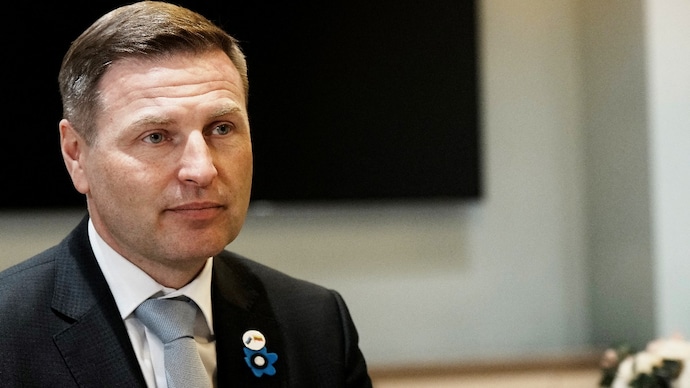
Estonian Defence Minister Hanno Pevkur looks on during an interview in Lithuania. (File Photo: Reuters)

UPDATED: Sep 3, 2026 19:56 IST
Estonia's defence minister Hanno Pevkur has resigned after a 70 million euros (over INR 768.50 crore) ammunition deal meant to support Ukraine unravelled into a procurement scandal involving an Indian-owned company that had no previous record of selling artillery shells. Pevkur, who has served as defence minister since 2022, announced his resignation on Wednesday, saying he was taking responsibility for the defence deal after a series of critical findings by Estonia's Audit Office.
"Estonian security is not a one-man project. It is our joint responsibility. That is why I must take political responsibility for the entire defence field today and pass on the baton of the minister of defence to the prime minister at a suitable time," Pevkur said in a social media post.
The issue dates back to contracts signed in 2024 by Estonia's Centre for Defence Investments with Datasel SRL, a company registered in Italy that had been acquired by India's Neco Defence Munitions earlier that year. The deal was intended to secure artillery shells for Ukraine at a time when Kyiv was facing acute ammunition shortages.
According to Estonian public broadcaster ERR and reports by Eesti Ekspress and Postimees, Estonia used money from the EU's European Peace Facility for the procurement and paid the company millions of euros upfront, with the total advance payments eventually reaching about €70 million.
70 MILLION EUROS PAID, NO AMMUNITION DELIVERED
Estonia signed the first contract in August 2024 and paid about €15 million upfront. It signed another deal in October and made a further advance payment of more than €10 million. By the end of the year, several more contracts had pushed the total amount paid in advance to around €70 million. The ammunition was initially expected to reach Ukraine within months, but deliveries were repeatedly delayed because of reported production problems. When ammunition was eventually received in 2025, Eesti Ekspress reported that it failed to meet quality requirements.
Estonia has since taken the dispute to the European Arbitration and Mediation Centre in Strasbourg, France, which handles commercial disputes, as it seeks to recover the €70 million paid for the ammunition.
Elmar Vaher, director general of the Centre for Defence Investments, told Eesti Ekspress that the deal should not have been signed.
"In my opinion, we should not have signed a contract with them," Vaher said. "If I start building a house and hire a company that has never built houses before, there is a doubt that the house will not be finished."
AUDIT RAISES QUESTIONS OVER DEFENCE SPENDING
Pevkur's resignation also follows criticism from Estonia's Audit Office over the management of defence funds and military procurement. According to ERR, an audit released on August 28 flagged problems in the use of funds and accounting of assets within the defence ministry, while similar concerns had been raised previously.
The watchdog warned that Estonia could ultimately have to cover about €70 million from its own state budget if the EU funding cannot be recovered.
However, Estonia's minister defended the division of responsibilities within the ministry, saying the defence minister does not personally oversee individual procurement contracts.
"Although the minister does not count socks and ammunition or conduct contract negotiations, the Audit Office’s criticisms, primarily concerning the activities of the defense forces and the Center for Defense Investments, raise the question of political responsibility," Pevkur said.
The European Commission has also been in contact with Estonian authorities over the disputed funding. Commission spokesperson Christian Wigand said Brussels had safeguards and recovery procedures to ensure EU taxpayers' money was properly used.
ESTONIAN PM SAYS PEVKUR NOT PERSONALLY AT FAULT
Estonian Prime Minister Kristen Michal had previously said he did not see personal fault on Pevkur's part but acknowledged that political responsibility could still apply. However, Pevkur said his decision came with the conviction that Estonia had made the right choices to strengthen its national defence. He also pointed to the country's sharp increase in defence spending since Russia's full-scale invasion of Ukraine in 2022.
"Estonia is better protected than ever before," he wrote on Facebook, adding that the country must continue supporting Ukraine because doing so also contributes to Estonia’s own security.
Estonia, a small country of about 1.2 million people, is part of both the EU and Nato and shares a border with Russia. Moscow's war in Ukraine has showed security concerns in the Baltic country, where the conflict is seen as a direct threat. Estonian government has been a strong supporter of Ukraine.
- Ends
Published By:
Satyam Singh
Published On:
Sep 3, 2026 19:56 IST