 2 hours ago
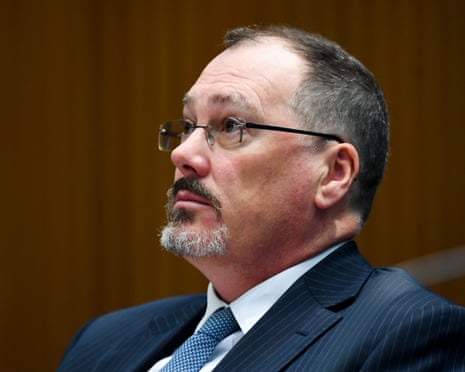
Energy minister urges Australians to only buy fuel they need
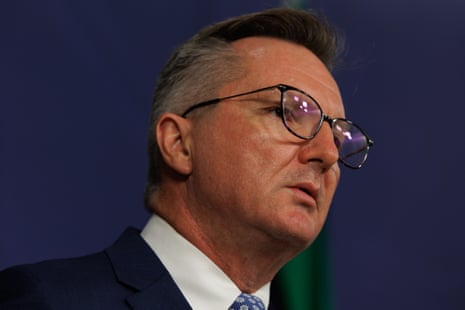
The energy minister, Chris Bowen, issued an urgent call for Australians to stop panic buying fuel, saying the country is well placed to weather the war in the Middle East but that the situation will only get harder if people hoard more than they need.
Bowen is speaking to reporters in Canberra, where he said:
As I’ve said, what we want is Australians to buy as much fuel as they need, not more not less. That is the best answer for everyone.
Because the fuel continues to arrive in Australia, as expected, because the refineries are working very well … and supplying the regions as quickly as they can … if Australians respond in the spirit of all coming together, and not panic buying, then that maximises our chances of getting through this situation.
Panic buying does not help the situation, panic buying very much causes the situation. I completely understand the concerns of Australians who might be thinking, we will buy a bit of extra fuel. Separately, people going to Bunnings and buying out all the Bunnings jerry cans – that is unhelpful. That is unAustralian. If they’re trying to maximise profits on Facebook marketplace …
Key events Show key events only Please turn on JavaScript to use this feature

Petra Stock
Conservation groups call for LNG levy
Australia’s state conservation organisations have called on the federal government to introduce a 25% levy on all Australian liquified natural gas exports.
They say the unfolding conflict in Iran is creating turbulence in energy markets, and multinational gas companies will profit, while everyday Australians face soaring energy bills.
The groups – which include the Nature Conservation Council of NSW, Environment Victoria, Queensland Conservation Council, Conservation Council SA, Environment Tasmania, the Conservation Council of WA, Environment Centre NT and the Conservation Council (ACT) – say the revenue raised could be used to provide compensation to Australian households and invest in the necessary transition to a renewable energy economy.
Jacqui Mumford, chief executive officer of the NSW Nature Conservation Council, said:
For decades, these companies have polluted our planet and contributed to the devastating climate disasters we are now facing. Now they are profiteering from a global energy shock.
Anthony Gough, acting director of the Queensland Conservation Council, said:
The logic is simple: polluters should pay for the damage they are causing. Households across Queensland are grappling with the double whammy of a summer of floods and a cost of living crisis, while fossil fuel companies rake in massive profits and send our gas overseas.

Penry Buckley
NSW government undecided on expanding hate speech offences to protect LGBTQ+ community
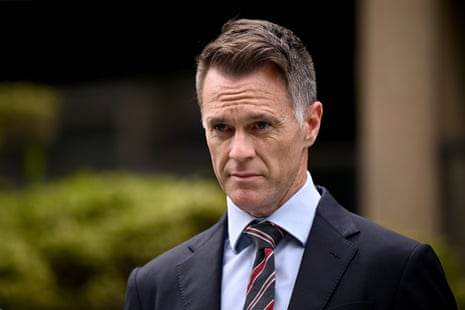
The NSW premier, Chris Minns, says his government has not made a decision about expanding hate speech offences to protect the LGBTQ+ community, rejecting the idea he is “brushing under the carpet” the recommendations of an unreleased independent review.
As we reported earlier, the NSW government is introducing measures to toughen penalties for hate crimes against the LGBTQ+ community and create a new offence for luring a person under false pretences in order to rob or violently assault them.
Today’s changes raise the penalties for inciting violence against vulnerable groups, but do not make changes to a controversial offence – section 93ZAA of the NSW Crimes Act – for inciting hatred on the grounds of race, introduced last year against the recommendations of the Law Reform Commission.
A six-month independent review on whether it should be expanded to cover religion, gender identity and sexual orientation, authored by former supreme court justice John Sackar, was tabled in November, but the government has not released it. The Independent MP for Sydney, Alex Greenwich, who has welcomed the changes announced today, has called on the government to share the report and follow its recommendations.
At a press conference this morning, Minns would not say if Sackar recommended the expansion of 93ZAA to cover offences against the LGBTQ+ community. He said:
We haven’t made a decision about it yet. The report’s been to cabinet and I don’t want to release before we make a call. Codifying vilification legislation is really difficult … primarily because it’s a clash of rights, but we’re considering it seriously and looking at the next steps. And I don’t want the report released before we made a decision in relation to it, so it’s not something that we’re brushing under the carpet.
Stonewall Hotel, iconic queer Sydney venue, closes doors on Oxford Street
The Stonewall Hotel, a mainstay of Sydney’s Oxford Street and the queer community, has closed its doors after 28 years. Craig Bell, a co-owner of the venue, said the move was a “sad and difficult decision” after the hotel took over an empty bank nearly three decades ago and made “something truly special”. An Instagram post announcing the decision reads:
Over the years, we have employed wonderful people, connected with remarkable customers, and forged friendships that will last a lifetime. My sincere thanks go out to every one of you who contributed to our story.
It seems that nearly everyone you meet who knows Stonewall has a story to share, a tale to boast about, or a cherished experience linked to our venue.
Stonewall recently opened a new venue in nearby Newtown, saying:
Change is constant, and Stonewall’s story is far from over. The party will continue as we embrace our new home in Newtown, carrying forward the spirit and community that has defined us for so long.
Allow Instagram content?
This article includes content provided by Instagram. We ask for your permission before anything is loaded, as they may be using cookies and other technologies. To view this content, click 'Allow and continue'.
Bowen won’t speculate about fuel rationing, says the government working ‘non-stop’ to deal with supply issues
The energy minister added:
I have said many times since the beginning of the bombing of Iran and the subsequent events, we can’t guarantee that international times won’t be uncertain. We can guarantee the government will be working non-stop to ensure we are as prepared as you possibly can be and that the impact on Australians and Australia is as little as it can be.
Every ship that we have expected to arrive has arrived, whether it is diesel, petrol or jet fuel. All the companies say to me that they fully expect deliveries into March and well into April but we are in internationally uncertain times.
Energy minister urges Australians to only buy fuel they need
The energy minister, Chris Bowen, issued an urgent call for Australians to stop panic buying fuel, saying the country is well placed to weather the war in the Middle East but that the situation will only get harder if people hoard more than they need.
Bowen is speaking to reporters in Canberra, where he said:
As I’ve said, what we want is Australians to buy as much fuel as they need, not more not less. That is the best answer for everyone.
Because the fuel continues to arrive in Australia, as expected, because the refineries are working very well … and supplying the regions as quickly as they can … if Australians respond in the spirit of all coming together, and not panic buying, then that maximises our chances of getting through this situation.
Panic buying does not help the situation, panic buying very much causes the situation. I completely understand the concerns of Australians who might be thinking, we will buy a bit of extra fuel. Separately, people going to Bunnings and buying out all the Bunnings jerry cans – that is unhelpful. That is unAustralian. If they’re trying to maximise profits on Facebook marketplace …
NSW premier says arts organisations 'can't expect the taxpayer to step in' if corporate sponsors withdraw support over programming decisions

Kelly Burke
The premier, Chris Minns, says arts organisations shouldn’t expect a government bailout if they have alienated corporate sponsors by making certain programming decisions.
His comments come as PwC confirmed it has withdrawn its sponsorship from the Biennale of Sydney, after complaints over alleged antisemitic content during the event’s opening night on Friday.
A statement from PwC said the company was disappointed that it had to withdraw from the biennale:
We entered this partnership to support an experience and series of arts and creative culture events which would be welcoming and inclusive for everyone. Following comments made by a performer at the opening night event, we no longer have confidence that the festival can meet our expectations.

A performance by US artist DJ Haram at the Lights On opening concert on Friday has attracted widespread criticism for invoking a “Zio-Australian-Epstein empire” that she claimed was responsible for silencing dissenters. She also praised the Palestinian martyrs of the Gaza conflict and suggested Australia was complicit in genocide against the Palestinian people.
Minns said he underwood how it could be tempting for festival programmers to engage such artists.
But it has big implications for the launch and the viability of the organisation from a financial perspective.
You can’t expect the taxpayer to step in two or three years down the line, because you’ve turned away all your funding and all your supporters and all the ticket sales, and then come to the taxpayer and say: ‘Can you bail us out?’
These are public conversations. They’re not held in private. Everybody’s got an obligation to either lower the tone, and try not to put on a pedestal people who are determined to rip the social fabric of our community apart.
DJ Haram has not responded to the Guardian’s request for comment. She has already left Australia. The biennale says it is conducting an internal review into the matter.
PwC has demanded the biennale remove all its logos and branding from event material and has cancelled an associated event for its clients scheduled for Thursday night. A spokesperson said PwC’s support had been both financial and contra, but the company was not the biennale’s auditor.
Aboriginal woman dies in custody in Perth prison

Sarah Collard
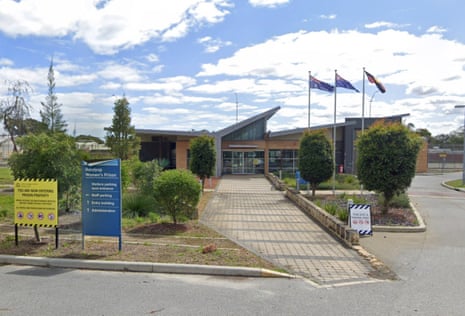
The WA Department of Justice has confirmed that a 35-year-old Aboriginal woman has died in custody at the Bandyup women’s prison in Perth’s outer north.
Staff found her unresponsive in her cell early Monday morning and provided first aid before emergency services arrived.
The Department of Justice says the woman was declared deceased on site and early investigations indicate no suspicious circumstances in the woman’s death.
WA police are preparing a report for the state coroner.
In response to the woman’s death, the Network of Incarcerated & Formerly Incarcerated Women and Girls said they were devastated by her passing.
The advocacy group said overcrowding, punitive policies, and a lack of support for vulnerable women are contributing to the growing incarceration of First Nations women.
Lorraine Pryor, Network member and the founder of WA-based organisation Voice of Hope, said many are survivors of violence and abuse.
These conditions are not incidental, they are the predictable outcome of policies that continue to expand policing and imprisonment, including increasingly punitive bail laws that are driving the imprisonment of more women, many of whom are themselves survivors of violence and poverty.
Aboriginal women are particularly impacted by these policies. They are the fastest growing prison population in Australia, and their deaths in custody continue to expose the ongoing violence of a system that was never designed to care for them.
Nearly two-thirds of Australians not getting enough calcium in their diets, ABS data shows
Dairy, tofu and leafy greens need to up their game as Australians aren’t getting enough calcium from the food and drinks in their diet, new data released today by the Australian Bureau of Statistics suggests.
The first analysis on nutritional requirements for vitamins and minerals in a decade found more than 60% of Australians fell short of meeting their calcium needs in 2023, which hadn’t changed since 2011-2012.
Linda Fardell, ABS head of health statistics, said diets that are low in calcium are linked to an increased risk of developing osteoporosis.
Over three-quarters of females and over half of males didn’t meet their calcium requirements, increasing to about 90% for females aged 12–17 years and 50 years and over.
Fardell:
Iron and folate are other nutrients where females have higher requirements and lower intakes in some age groups.
For example, 48 per cent of females aged 18–29 years did not meet their iron requirements compared to 8 per cent of males in the same age group.
‘Iranian women’s footballers shouldn’t have to choose between their sport and their safety’
Nos Hosseini is a spokesperson for the Iranian Women’s Association. In an opinion piece for Guardian Australia, she writes:
When seven members of Iran’s women’s national football team sought protection in Australia, it appeared they had finally found safety. Within days, some made the difficult decision to return to Iran despite the risks.
For many Iranian athletes, the most powerful opponent they face is not across the field. It is the regime that controls their lives.
To compete internationally, they must submit to a system that demands obedience, restricts their movement and punishes dissent.
Read more here:
Body found in Hobart after man falls overboard on research ship
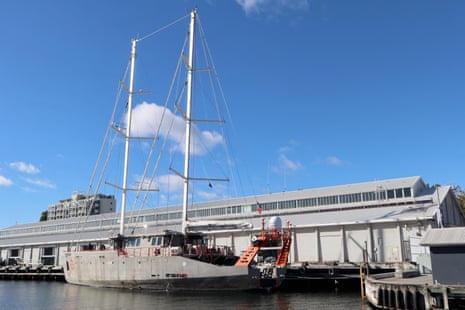
Divers have recovered the body of a man who is believed to have fallen from a French Antarctic research vessel docked in Hobart, AAP reports.
The man, aged in his 20s, was reported missing by crewmates of the Perseverance at 3.55am on Tuesday. Police searches were conducted at the Sullivans Cove waterfront, with his body discovered shortly before 7.45am.
The Perseverance is a 42m French ocean-going sailing vessel designed for scientific research and supply missions in polar waters.
The ship set sail from New Zealand on 20 January on a mission to study breeding patterns of species in Antarctic waters. Tasmania Police are expected to provide more information later on Tuesday.

Graham Readfearn
Far north Queensland on cyclone watch
Communities in far north Queensland have been asked to be on alert with the latest Bureau of Meteorology forecast suggesting a tropical low in the Coral Sea could become a cyclone as early as tomorrow evening.
The timing of a likely declaration has shifted with tropical low 34U now being given a high chance of becoming a cyclone – which will be called Narelle if it eventuates – earlier than was forecast yesterday.
Current weather models suggest a landfall somewhere north of Cooktown late on Thursday or on Friday morning when the system is expected to track west over the Gulf of Carpentaria.
Angus Taylor says we need to ‘drill more, 100%’
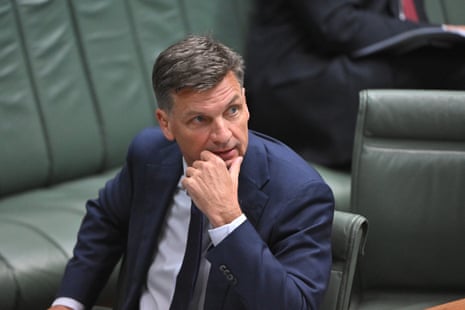
The opposition leader, Angus Taylor, is speaking in New South Wales about the ongoing fuel issues linked to the war in the Middle East. He said he thinks we need to “drill more, 100%”.
Taylor said:
We’ve got great resources. Bass Strait is an old source of oil and gas, but an important one, and we need to get the most out of it, and we’ve got new emerging sources in the north in the Beetaloo basin.
So we need to see that drilling happen at pace. This is a government that’s made it very hard for resources companies to get the approvals they need … to get resources, oil and gas, out of the ground.

Daisy Dumas
NSW becomes first state to launch digital birth certificates
People aged 16-21 in New South Wales are the first Australians to be able to set up digital birth certificates.
The state government said the digital documents, launched today, were designed to international security standards and could be set up via the Service NSW app.
Sixteen to 21-year-olds born in NSW and who hold a NSW photo card or driver licence are eligible to apply.
The government said digital birth certificates can be used to verify identity and apply for licences and certifications needed to start a job – and that, over time, the move will give people greater control over what information they share.
Jihad Dib, the minister for customer services and digital government, said:
I’m proud that NSW is the first place in Australia where young people across the state can carry their birth certificate securely on their phone – instead of having to rummage through drawers or call mum and dad!
He said the technology was “the same as having a birth certificate in your pocket – but much more secure”.
Households struggle with confidence as cash rate rise looms

Patrick Commins
A parade of bad news overseas, soaring petrol prices and expectations of higher interest rates have left households the gloomiest they have been since the onset of the Covid-19 pandemic in early 2020.
ANZ’s weekly consumer sentiment survey revealed a severe confidence hit to Australians still struggling to cope with the high prices left by the pandemic inflation outbreak.
Sophia Angala, an ANZ economist, said “households are increasingly pessimistic about the one-year and five-year outlooks for the economy, likely driven by geopolitical uncertainty and the shifting outlook for inflation and rates”.
The Reserve Bank is expected to lift its cash rate target to 4.1% at 2.30pm today, in a double blow to households facing a 30-40% jump in fuel prices since the start of the US-Israel war on Iran.
“With inflation above target and the labour market viewed as tight by the RBA, there is likely to be less tolerance than usual to an external inflation shock, in this case from higher oil prices,” Angala said.
More on police operation at Lidcombe
We have more details from Lidcombe, where a major police operation ended a short time ago.
Police say an investigation is now under way after a woman was threatened by a man armed with a gun at a multi-level car park on Uhrig Road at about 7.20am.
The man, who was not known to the woman, left the scene in a white Subaru SUV with cloned number plates, police said. The woman was shaken but not physically injured.
A perimeter was established and specialist officers were called to assist. An extensive search of the area was conducted, police said. No shots were fired, they said.
Police are appealing for any information or dashcam vision related to incident.

Caitlin Cassidy
Confidentiality clauses ‘silence’ students’ complaints, ombudsman says
Students may be choosing not to seek support from their universities over sexual harassment and assault complaints because of confidentiality clauses preventing them from speaking with anyone about their experience, a new report has found.
The Student Ombudsman’s first report, published on Tuesday, found 21 universities used confidentiality clauses in their complaints – applying to around 770,000 students. The clause often automatically apply to students when they lodge a complaint, preventing them from speaking with anyone outside of the university about their experience or the complaint’s outcome.
In some instances, student wellbeing and recovery were put at risk, including a university beginning misconduct proceedings against a student when it alleged they breached confidentiality after reporting sexual harassment to their university.
The ombudsman, Iain Anderson, said students “should have the right to talk to others for support and seek external advice after they have made a complaint to their higher education provider”.
Excessive confidentiality can cause a complainant to feel silenced or disempowered … I am concerned that students … could be left unable to discuss the situation with a support person, seek legal advice, contact a health professional for support, or take ownership of how they talk about a traumatic experience including gender-based violence.
The ombudsman was established last year to tackle gender-based violence on university campuses.