 4 hours ago
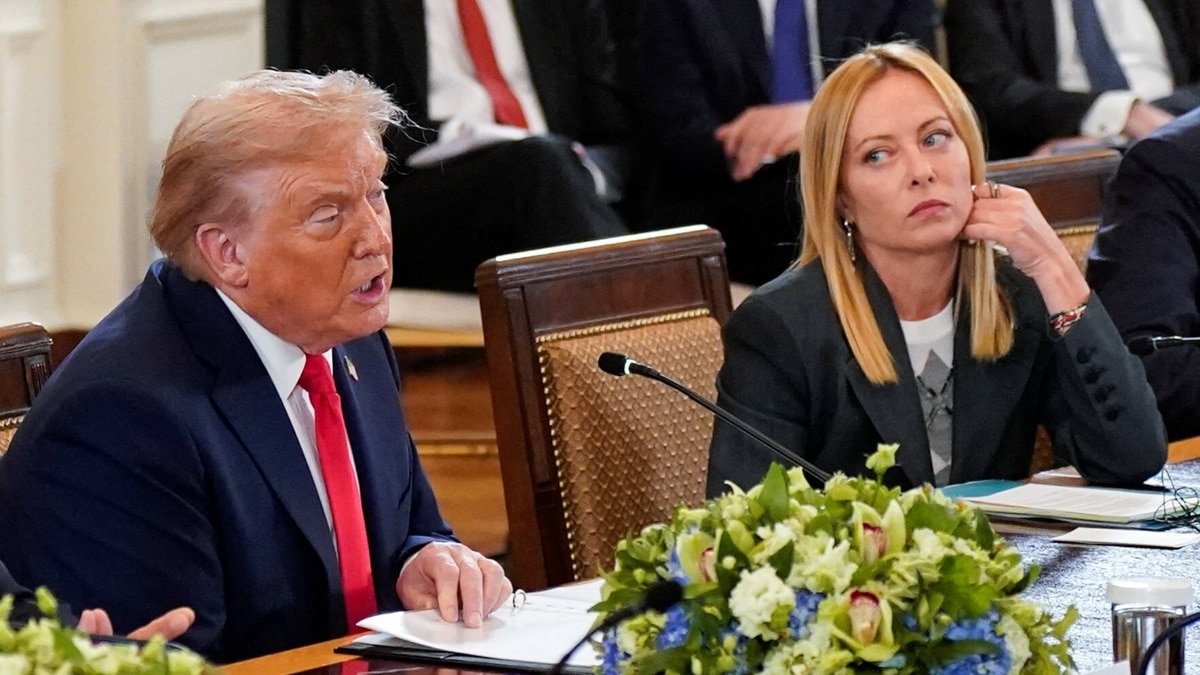
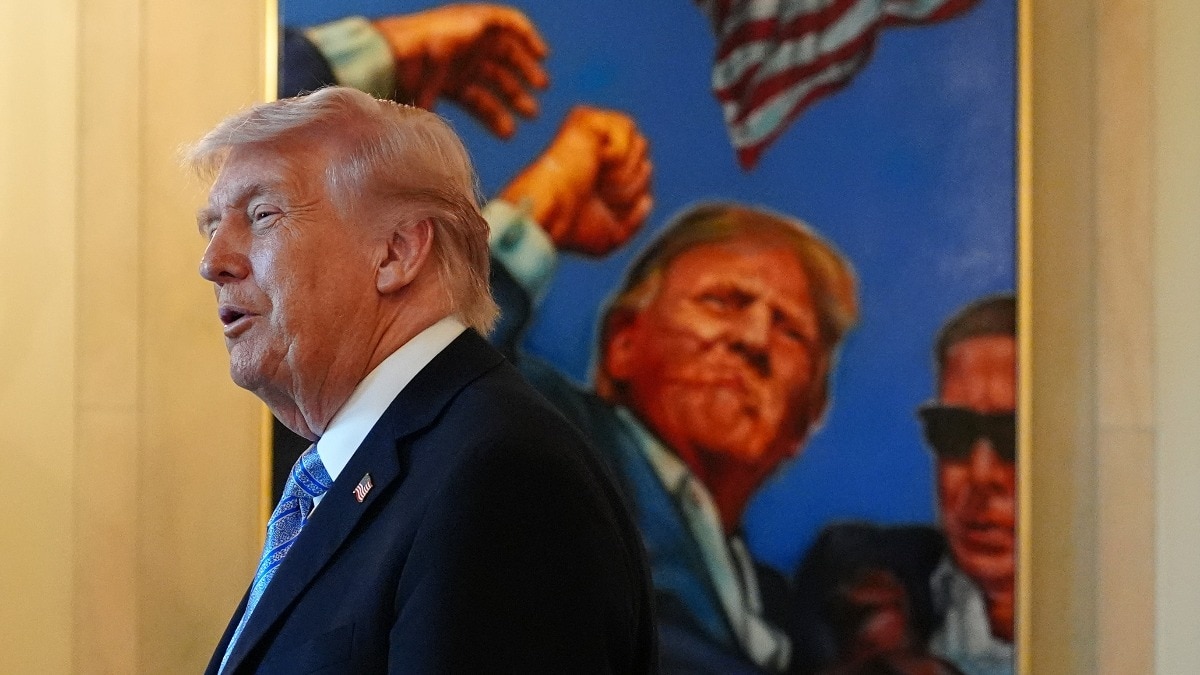
Donald Trump signed the US-Iran memorandum at the Palace of Versailles in France, a venue of historical significance. It was here that the 1919 Treaty of Versailles formally ended World War I. The treaty helped create the conditions that eventually led to World War II. The same palace hosted Trump as he signed the deal with Iran.
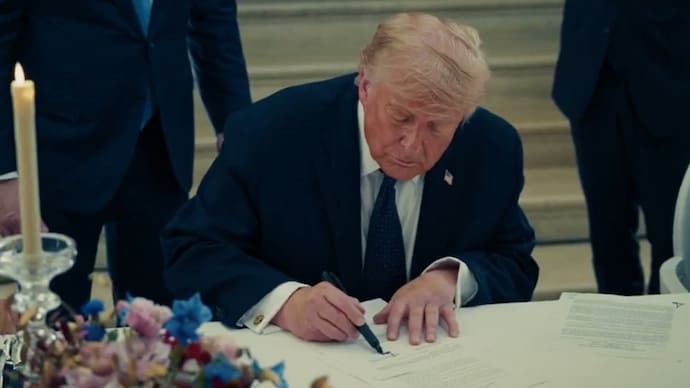
Donald Trump put his signature to the memorandum of understanding at the Palace of Versailles following the G7 summit. (File Image)
The Palace of Versailles is remembered as the place where world leaders gathered in 1919 to "end all wars". But history remembers it differently. The Treaty of Versailles did not end the conflict. It postponed it, creating the conditions for an even bloodier catastrophe two decades later, World War 2.
That is what makes US President Donald Trump's signing of the US-Iran Memorandum of Understanding (MoU) at Versailles so symbolic. For Trump and his supporters, it seemed like the perfect backdrop for a diplomatic triumph. But it is also a reminder that peace agreements can sometimes become the opening chapter of the next war. That's what happened after the Treaty of Versailles was signed to end World War 1. But the treaty, historians say, did little to "end all wars", and provided the perfect trigger for the next World War just 20 years later.
The timing could hardly be more ironic. Even as the ink dries on Trump's understanding with Iranian President Masoud Pezeshkian, the US President appears eager to showcase a diplomatic success ahead of America's 250th Independence Day celebrations on July 4 and the November midterm elections. Yet Israeli strikes continue on Lebanon, while Prime Minister Benjamin Netanyahu remains convinced that Iran's nuclear ambitions still pose an existential threat to Israel.
The central dispute that has driven tensions in the Middle East region for decades has not disappeared. It has seemingly been pushed into the future.
The symbolism of Versailles was highlighted by Pakistani barrister Taimur Malik, who praised the diplomatic messaging surrounding the agreement, including Pakistan's role as a witness and mediator. But there is a deeper symbolism too, that is seemingly falling into supporters' blind spot.
WHAT WAS THE TREATY OF VERSAILLES? WHY IT'S PERFECT ANALOGY FOR A BIGGER WAR
The Treaty of Versailles is often remembered for ending World War 1. But what followed was far grimmer.
By imposing punitive conditions on Germany while failing to create a durable security architecture, the treaty produced resentment rather than reconciliation. Within two decades, Europe was once again at war, this time on a far greater scale.
No historical analogy is perfect, and the Middle East of 2026 is not Europe of 1919.
Yet the symbolism is difficult to ignore.
The new US-Iran understanding might pause a dangerous confrontation. But it does not resolve the question that has haunted the region for decades. What happens if Iran eventually acquires a nuclear weapon, or comes close enough to acquiring one?
For Netanyahu, this question has been the cornerstone of his politics for decades.
The Israeli Prime Minister has spent much of his political career warning that a nuclear-capable Iran would pose an existential threat to the Jewish state. Since the 1990s, he has repeatedly argued that Tehran's ambitions must be stopped before they reach a point of no return. To Netanyahu and his supporters, any agreement that eases pressure on Iran without permanently dismantling its nuclear capabilities merely delays the confrontation.
According to the US-Iran understanding, there's no concrete provision to stop Iran from going nuclear (at least as of now).
That is why Israeli military operations have not stopped in Lebanon. While Washington speaks the language of de-escalation, Jerusalem continues to act as though the larger conflict remains unfinished.
TRUMP WANTS TO END THE WAR BEFORE US' 250TH INDEPENDENCE CELEBRATIONS, MID-TERMS
Trump, on his 80th birthday, saw an opportunity to claim that he ended a war. The world, and more importantly, Israeli analysts, saw it as America's surrender to Iran.
Trump has political incentives of his own. After months of criticism over foreign policy and economic uncertainty, a diplomatic breakthrough offers a much-needed victory narrative. An agreement with Iran allows the White House to project strength while avoiding a prolonged military commitment in the Middle East. A section of Americans, including military veterans, has long criticised the US's campaigns in the Middle East, in which thousands of American soldiers have been killed over the past three decades.
It also arrives at a politically useful moment, with America preparing to celebrate the 250th anniversary of its Independence and an electoral battle looming on the horizon for Trump.
The problem is that peace deals are often judged not by the ceremony surrounding them, but by the realities they leave unresolved. The Versailles analogy is powerful precisely because the treaty's architects believed they had secured peace. They held grand ceremonies, signed historic documents and promised a new international order. What they failed to appreciate was that the underlying conflict had not truly been settled.
That danger exists today as well. The MoU may reduce tensions between Washington and Tehran, it may reopen economic channels, calm energy markets and buy valuable time for diplomacy. But it does not erase Israeli fears, dismantle Iran's strategic ambitions or resolve the region's deeper rivalries. It leaves the Arab sheikhdoms navigating an altered Middle East balance, where Iran appears more resilient than many had expected.
The agreement arrived just weeks before July 4, when the United States will mark the 250th anniversary of its independence, a milestone loaded with symbolism for any American president. Trump would hardly want the celebrations overshadowed by images of a widening Middle East conflict, rising energy prices, or the prospect of deeper American military involvement in the region.
A ceasefire and a diplomatic understanding, however fragile, offer a far more appealing backdrop for a historic national celebration.
The deal also comes at a politically sensitive moment for Trump. With his approval ratings under pressure and mid-term elections looming just six months from now, the President has every incentive to project the image of a leader who ended a war rather than expanded one.
Whether the agreement ultimately delivers peace, however, is a different question altogether. History is filled with leaders who declared victory at the signing table, only for the underlying conflict to return in a more dangerous form. Trump himself declared victory at least 15 times long before the US-Iran war looked won. As he celebrated from Washington, American aircraft were still being lost across the Middle East and Iranian missile barrages continued to punch holes in the image of US military invincibility.
Wars do not end with signatures. Perhaps that is the real symbolism of Versailles.
For now, Trump can celebrate a diplomatic achievement and his supporters can point to a bigger war avoided. Yet, as Israeli bombs continue to fall in Labanon, the lessons of 1919 linger.
- Ends
Published By:
Anand Singh
Published On:
Jun 19, 2026 13:51 IST