 7 hours ago
The US and Iran have delayed direct technical talks in Switzerland after logistical plans fell through. The hold-up exposes regional tensions and uncertainty around the new 60-day nuclear agreement.
Image used for representational purposes only

Zurich,UPDATED: Jun 19, 2026 11:18 IST
The US push to quickly begin direct technical talks with Iran has run into a delay, just two days after an agreement was signed opening a 60-day window to negotiate a permanent understanding on Iran's nuclear programme and restore oil traffic through the Strait of Hormuz to prewar levels.
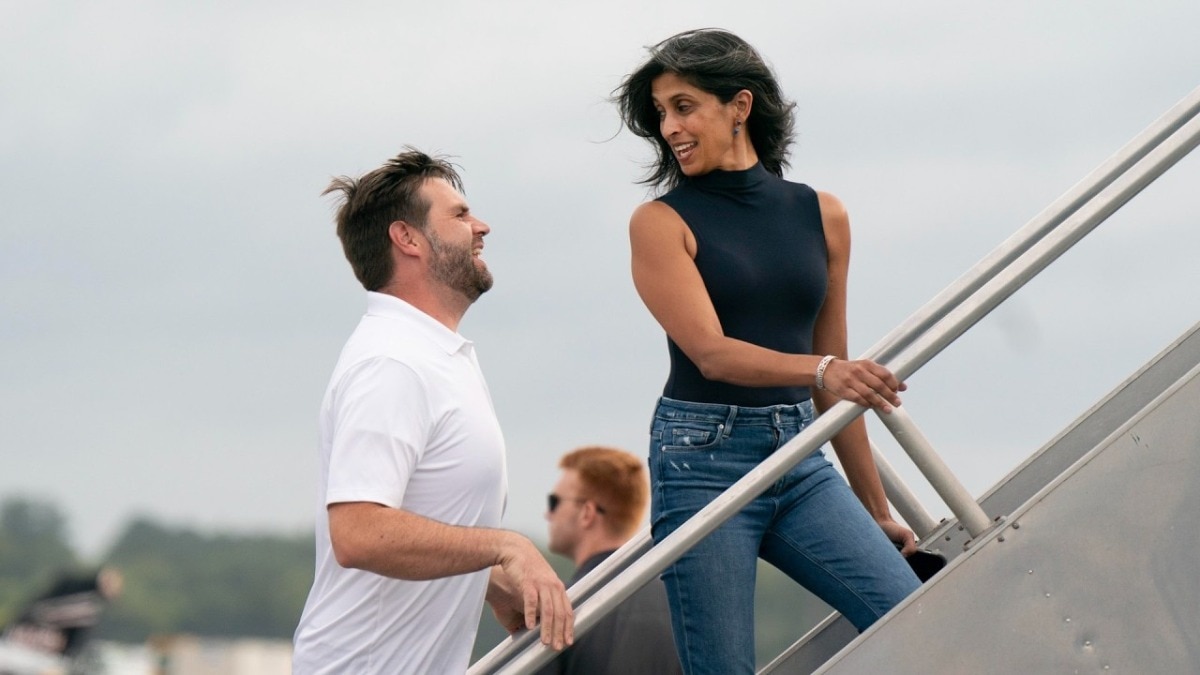
Vice President JD Vance, who President Donald Trump has asked to lead the negotiations, had been expected to travel to Switzerland for the talks. But the White House said plans could not be finalised and Vance would remain in Washington for now, as uncertainty grew over when Iran would send its delegation.
Vance had been prepared to make an overnight flight on Friday to meet Iranian officials at a mountainside resort in Obburgen, a small Swiss village. His staff and a group of journalists had gathered at Joint Base Andrews outside Washington, while White House officials, advance teams and more media were already in Switzerland preparing for his arrival.
The trip was abruptly called off on Thursday evening. In a statement, the White House said Vance and his delegation were ready for talks but unable to complete arrangements. “The logistics of these negotiations have never been simple or predictable,” the statement said.
The announcement came after Al-Mayadeen, a Pan-Arab satellite channel politically allied with the Iranian-backed Lebanese militant group Hezbollah, reported that Iran was delaying its delegation’s travel to Switzerland because of Israel’s continuing military campaign in Lebanon. Israeli Prime Minister Benjamin Netanyahu said on Thursday that Israel’s military would stay in a “security zone” in southern Lebanon as long as “Israel’s security needs require it.”
Israel and Hezbollah are not parties to the agreement. Iran says Israel must withdraw from the large area of southern Lebanon it occupies, but the interim deal does not explicitly require that and only guarantees Lebanon’s “territorial integrity”.
Hours before the postponement, Vance had signalled the uncertainty around the talks. “Our plan is to go to Switzerland, I don’t know exactly when,” he told reporters at a White House briefing. “We think these technical negotiations start sometime this weekend. That’s still the plan. But that could change.”
Soon afterwards, Iran’s Supreme Leader Ayatollah Mojtaba Khamenei backed direct talks with the US in a brief statement carried by state media, appearing to give Iran’s leadership room to proceed with a first round of negotiations. “It is obvious that the face-to-face negotiations that will be held in the future will not mean accepting the enemy’s opinion,” Khamenei said.
The message appeared to give Khamenei, who was badly wounded in the February 28 US strike that killed his father, some room to manoeuvre. Hardliners in Iran, including his father, had long opposed direct talks with the White House, especially after Trump withdrew during his first term from the 2015 nuclear deal negotiated under former US president Barack Obama.
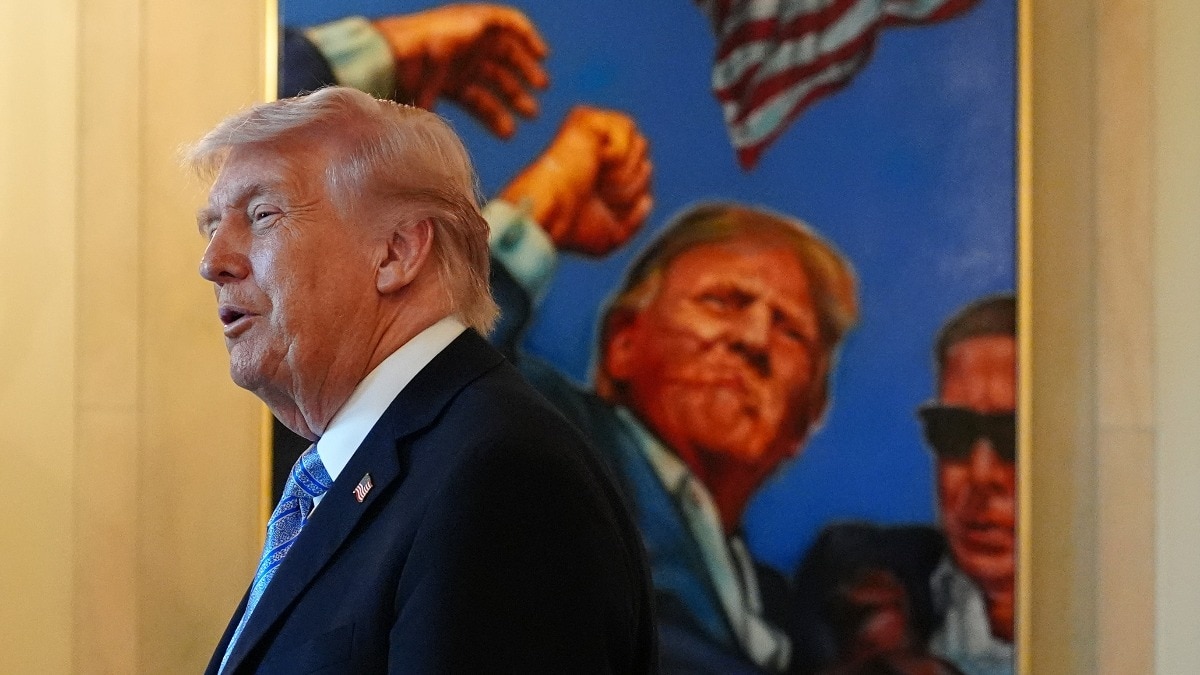
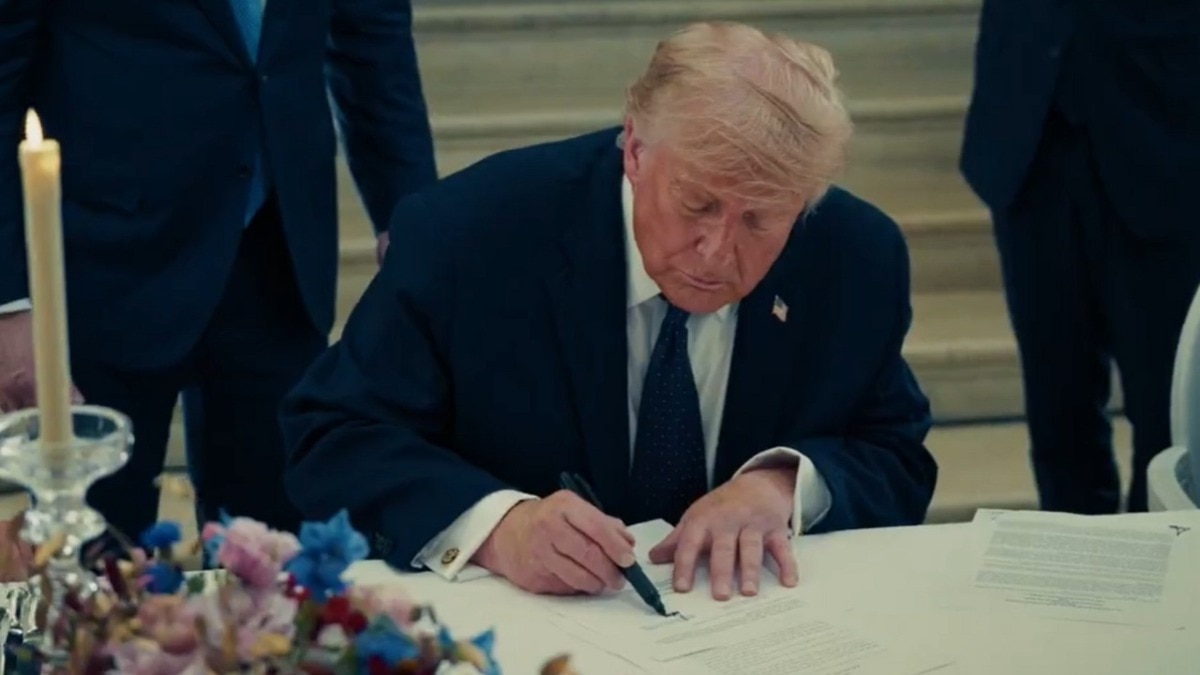
Vance had originally been expected to travel to Switzerland for a formal signing ceremony. Instead, Trump signed the agreement on Wednesday at a dinner at the Palace of Versailles with French President Emmanuel Macron, while Iranian President Masoud Pezeshkian signed it separately.
The agreement says Iran’s stockpile of highly enriched uranium, believed to be buried under rubble after US strikes last year on key nuclear sites, must at minimum be diluted under international supervision. It also says Iran shall not procure or develop nuclear weapons, a commitment Tehran has made before, though a number of other provisions are yet to be worked out.
Analysts said Iran was entering the talks with some confidence after effectively shutting down the Strait of Hormuz and sending shockwaves through the global economy. Rosemary Kelanic of Defence Priorities in Washington said the US was now “essentially trying to negotiate our way back to the prewar status quo”. Neil Quilliam of Chatham House said the “buoyant” Iranian leadership felt it had the upper hand and that Khamenei’s backing sent “a very strong signal domestically: ‘We’re now on an equal footing with the US’”. Quilliam added that, in Iranian thinking, “Trump has gone from calling for regime change on February 28 to this: Now they’re going to sit down with us directly and talk about these big issues,” and that the message at home was: “We are firmly in control of this. There can be no protests, no revolution: We are a new regime and we’re staying put.”
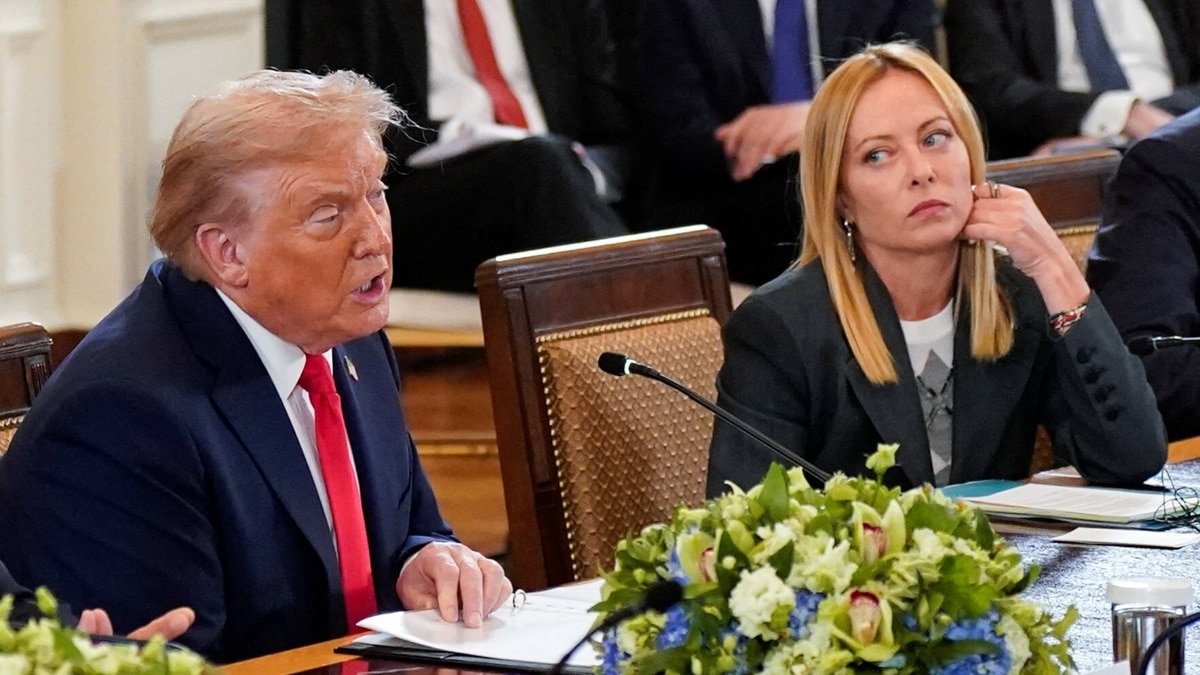
Trump’s own tone has shifted in recent days. For weeks, he had said the financial cost to Americans mattered less than eliminating Iran’s nuclear programme and had said any effect on November’s midterm elections did not concern him. But at the G7 summit in Evian-Les-Bains, France, he said continued war could have led to “economic catastrophe” and that oil reserves were on course to run out in about four weeks. “And the one president I did not want to be was the late, great Herbert Hoover,” Trump said.
For Vance, seen as a possible 2028 presidential contender, the outcome of the talks could carry major political consequences. His opposition to foreign wars was central to his political rise, but he is now defending efforts to negotiate an end to Trump’s conflict, which Democrats have criticised as a misguided move. Some Republican hawks have also opposed the approach.
Senator Roger Wicker, the Republican chairman of the Senate Armed Services Committee, said on Thursday he was worried the agreement “negotiates away the victories” of the US air campaign against Iran and that parts of it were “completely out of step” with Trump’s goals. Trump had sharply criticised Obama over the 2015 nuclear deal, arguing it failed to stop Tehran moving towards a weapon and sent billions of dollars to the Islamic Republic. He pulled the US out of that deal, the Joint Comprehensive Plan of Action, in 2018. Britain, China, France, Germany, Russia and the European Union were also signatories.
Trump has rejected comparisons with the JCPOA, saying he had “negotiated from strength” after a major military campaign, unlike Obama, whom he accused of paying the Iranians without getting compliance. Wicker was especially concerned about a 300 billion dollar reconstruction and economic development fund for Iran mentioned in the 14-point agreement, saying it “would make Iran’s payoff under Obama’s 2015 deal look like a pittance by comparison”. Trump and Vance have said no US taxpayer money would go to the fund and that it would not move ahead without concessions and reforms from Tehran.
For now, the planned Switzerland meeting remains on hold, even as both sides appear to be positioning themselves for talks on Iran’s nuclear programme, sanctions and regional stability under the new 60-day agreement.
With PTI Inputs
- Ends
Published By:
India Today Web Desk
Published On:
Jun 19, 2026 11:18 IST