 2 hours ago
In an exclusive interview, Russian Ambassador Denis Alipov discusses American foreign policy, explaining his concerns about how the US approaches partnerships with India and the implications of recent shifts in energy policy.
In an exclusive interview with India Today Global, Russian Ambassador to India Denis Alipov has delivered a candid and unsparing critique of American foreign policy at a time when global tensions are at breaking point. Speaking on the escalating West Asia crisis, India's energy security challenges and the emergence of a multipolar world order, Ambassador Alipov's words carry significant implications for how New Delhi navigates its strategic future.
GEETA MOHAN
Starting with the biggest announcement that has taken place after all the sanctions because of the war between Russia and Ukraine. We are now looking at a situation where, because of the Iran crisis, Washington has, and I quote, "allowed countries to buy oil from Russia." Earlier it was an exemption for India, and the word "permission" was used. Now it is for the world. Your reaction, sir.
DENIS ALIPOV
I won't be overly optimistic about that. There's every chance the US may slap back sanctions on the oil at any point in time in the future. Generally, these restrictions have been very detrimental to any country doing business with Russia. They have been very detrimental to any country that is serious about its energy security, and let me also say that those have been unilateral, illegitimate sanctions. We should not forget about that.
GEETA MOHAN
Right. Illegitimate sanctions. You're saying that it is temporary in nature, but how do you read the fact that right now Russian oil has become acceptable, and when India really wanted it, it was not? The convenience of the West to use Russian oil when they want to and as they please.
DENIS ALIPOV
This is precisely the behavior of the West. There are one set of rules for the West and another set of rules for the rest of the world. This is not the way to do business. This is not the way to conduct international relations. But as regards the global energy markets, whether it is India or anybody else, you simply cannot exclude the Russian share from the global energy markets unless you are determined to create a crisis and a rise in prices. I don't think this is something in the interests of the world. The prices have risen. Global markets have been disturbed. Russia stands for stabilization of the energy markets and the situation. All of this has been triggered by the aggression of the US and Israel against Iran.
GEETA MOHAN
Ambassador, we'll talk about how Moscow and New Delhi are dealing with a crisis that for India is becoming larger now with shortages in supply, particularly of gas and oil, but before that, let me address what's happening in West Asia, in the Persian Gulf. Iran attacked Israel. The Supreme Leader, Ayatollah Khamenei, was killed. Moshtaba Khamenei is now the new Supreme Leader. But Netanyahu has already said that he is the prime target. How is Russia looking at the fact that there's a new leader in place in Iran and that he could very well be the next target again?
DENIS ALIPOV
I don't see a direct connection between the appointment of a new Supreme Leader of Iran. But there is a direct connection between the assassination of the predecessor of Ayatollah Khamenei and the danger of the conflict, the aggression expanding all over the Middle East. I think we are already seeing that the French are getting involved, Great Britain is getting involved. Russia stands for the immediate cessation of hostilities and a return to the negotiation table. This is the only way. This is the only way for Ukraine. This is the only way for the Middle East.
GEETA MOHAN
They were at the negotiating table. Iran was in talks. Foreign Minister Arakchi was actually in Iran when all this was happening, during the first attack. The objective then was spelled out to be regime change.
DENIS ALIPOV
Exactly. And this is yet another indication of how unreliable the Western partners have been. The negotiation smoke screen, the parallel preparation of aggression. This is not the way to do business in international relations.
GEETA MOHAN
Are you expecting a timeline, or are you expecting a full-scale war in the entire region? What is the expectation? What's Russia's reading when it comes to the situation in West Asia at this point?
DENIS ALIPOV
We are very concerned that the current conflict may expand into a larger conflict. We should not allow this to happen. We need to do everything so that the hostilities cease and the attacks against Iran and Iranian retaliation stop.
GEETA MOHAN
Ambassador Alipov, Russia has been very clear—one, about the fact that this war was unwarranted. It has condemned the war, the actions, and the aggression. But Washington has warned Russia against getting involved. What kind of involvement do we see from Russia, not just in helping Iran, but also in becoming a peacemaker here?
DENIS ALIPOV
We don't speak the language of warnings with anybody, the US included. I don't think that was the case when President Putin and President Trump spoke recently. Our position is articulated. It has been very clear, and we are determined to do everything we can so that the conflict ends immediately.
GEETA MOHAN
But in terms of support, what kind of support does Russia intend to extend to Iran, which has come under huge attack today? The Revolution Square was bombed.
DENIS ALIPOV
We have supported Iran. We have spoken at the UN on this subject. Our position has been very public. As regards other kinds of support, I would refrain from answering that.
GEETA MOHAN
But there is support. There's a proposal for peace by Moscow. What's that proposal, and what could that proposal look like at a time when Netanyahu says he wants to change the regime, saying this is not the end? Trump says he'll extend all support. What is the proposal, and what kind of conversation do you think could end this war if Moscow and Washington really wanted it?
DENIS ALIPOV
We have not been directly involved in negotiations between Israel and Iran, between the US and Iran. But we have always stood for an acceptable, mutually acceptable formula. There have been accusations against Iran about nuclear weapons. There is no evidence Iran possesses nuclear weapons or weapons-grade nuclear material. There are Israeli concerns which certainly should be taken into account. There was a terror attack against Israel in 2023. Israel retaliated hugely disproportionately. But the current actions against Iran have been equally unacceptable.
GEETA MOHAN
Are they unprovoked? Do you think they're unprovoked? I ask because what are Moscow's red lines? What are the red lines for Moscow? Israel says it acted in self-defense.
DENIS ALIPOV
Those have been unprovoked actions. Negotiations, as you said, were going on. There are open statements by Israeli politicians that regime change should happen in Iran. What are these aims? Frankly, these are unacceptable. This is an unacceptable attitude in international politics. Military action should stop as soon as possible, and negotiations should restart. This is the only way to find and create a place in the Middle East for coexistence between Iran and Israel and everybody.
GEETA MOHAN
Alright, let's turn to India then. What conversations are you having with the ministry here? What is Moscow having with New Delhi when it comes to assurances, given the fact that now India is allowed to buy oil? How does Moscow look at the fact that America uses the word "permission" and "allowed" to buy something that should be part of India's strategic autonomy and foreign policy architecture?
DENIS ALIPOV
The US shows its arrogance in the way it does business everywhere. I have said that already. There are no equal partners for the US—junior partners at best, generally subordinates. The US is at the top and dictates the course of actions. This is an unacceptable way of dealing with global policies and partners around the world. And it also shows, in my view, the unreliability of the US. Today it says do this way. Tomorrow it says do another way. We do like this. We don't like that. This creates problems for other countries which would like to have the US as a partner, as an equal partner, but the US is not prepared for that.
GEETA MOHAN
That's a very important message that you're sending out about equality and partnership. But we've seen Venezuela happen. We've seen Iran happen. It does seem like there is a strategy to counter not Russia alone, but China, because these were China's main sources of oil—whether it's Iran, Venezuela, and now Russia. The fact that America is acting like a gatekeeper when it comes to these oil reserves and resources has created absolute turmoil in one of the biggest areas with oil reserves, which is the Arab world, the Arabian Peninsula. What's your reading on whether prices will stay high? How long will they stay this way? How difficult is it going to become for the global economy to stabilize should this war continue?
DENIS ALIPOV
The global economy will become destabilized if such instability continues. You mentioned Venezuela. That's yet another example of how the US acts. We spoke about the assassination of the Supreme Leader of Iran as a precedent. Another precedent was with Venezuela when a legitimate leader of an independent country got kidnapped in the middle of the night. What was that? This has to be rejected by the world community outright.
GEETA MOHAN
With this war, are you seeing the world transitioning into a multipolar world, something that India has been talking about with leadership changing, not just centered around America, but also now China and Russia?
DENIS ALIPOV
The process of multipolar reorganization is already going on. This is an objective trend. It's not something that we promote, nor does anyone promote it. It is an objective development. And it also means that the US and the West at large should start to regard the rest of the world as equals.
GEETA MOHAN
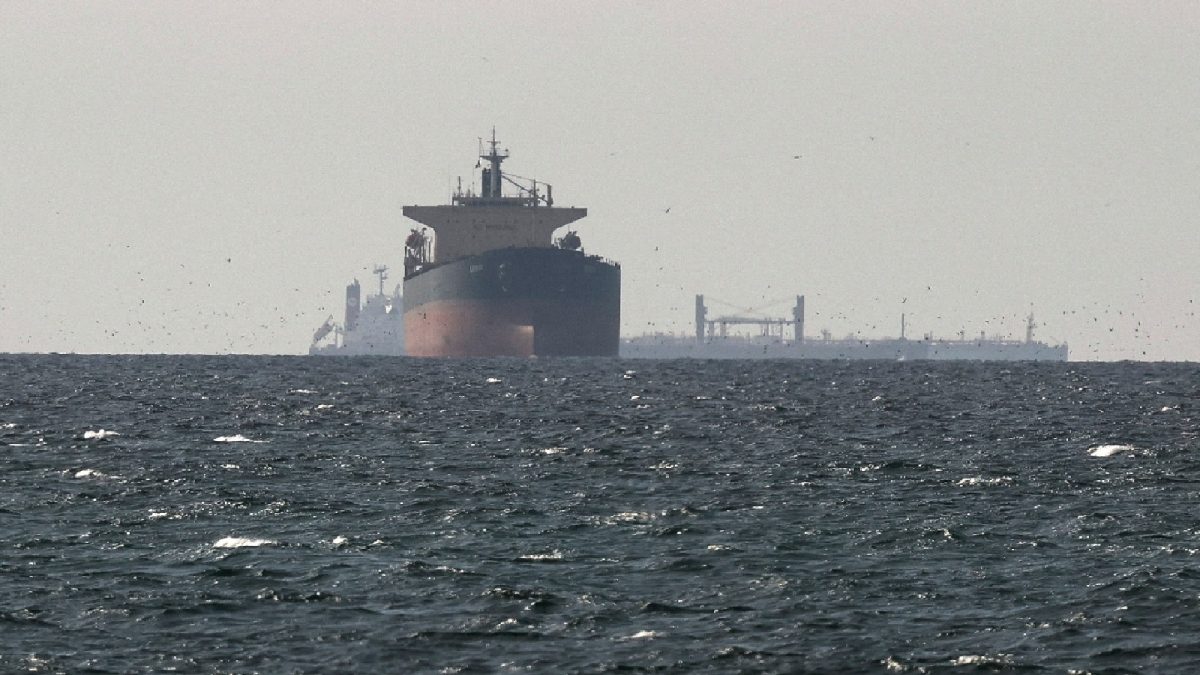
I'll move to the Russia-Ukraine conflict and the role of NATO in what is happening, but before that, a quick question because this relates to our neighborhood. The Strait of Hormuz is being choked. Oil vessels are not coming through. An attack on an Iranian tanker off the coast of Goa in the Indian Ocean—India's backyard. America has always talked about the Western Hemisphere being theirs. What kind of threat do you see when a country such as America comes to the Indian Ocean and takes down an ally's ship? And conversely, if this were Russia and China, what would the world's reaction have been?
DENIS ALIPOV
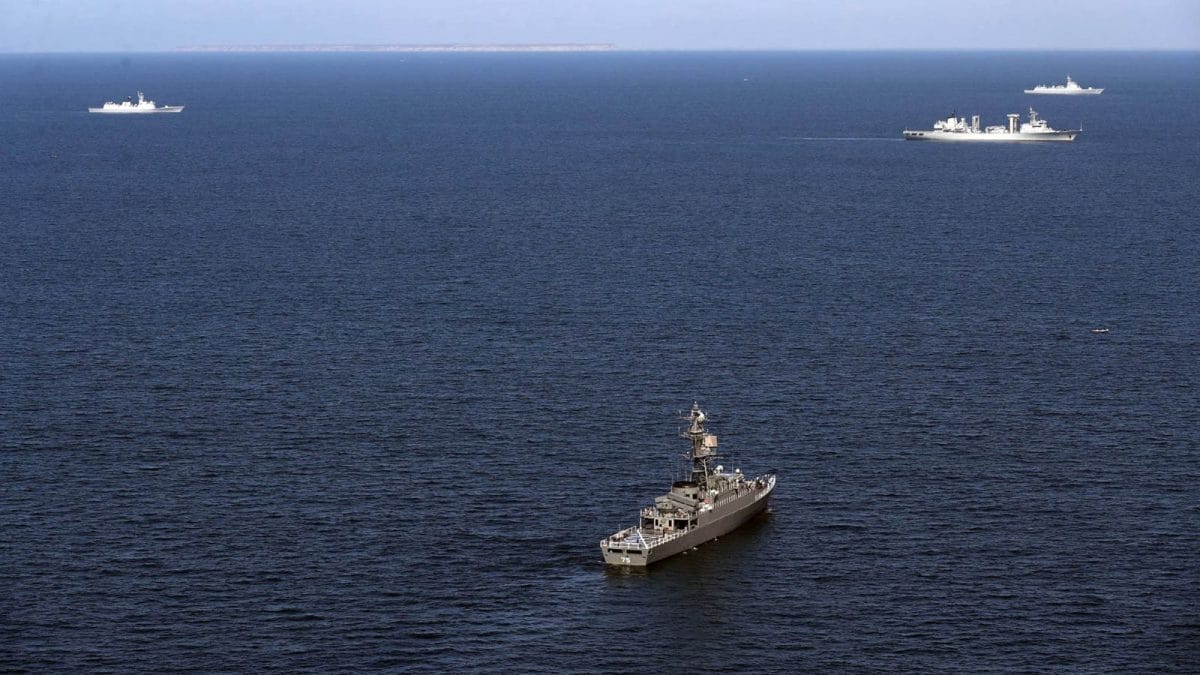
This is yet another indication of how the US behaves in an unacceptable way. As far as I know, the Iranian ship which participated in a naval exercise with India was unarmed. Basically, the US attacked an unarmed naval ship. How shall we judge? How can we regard such actions other than to condemn them?
GEETA MOHAN
Serious condemnation there. Moving on to the Ukraine and Russia conflict—diplomatic channels are open, conversations are still ongoing. Are we looking at an end to the Russia-Ukraine conflict? What's the role of America here? There have been talks in Moscow. In fact, there were talks in Moscow when we were there for President Putin's interview. Is there any resolution in sight?
DENIS ALIPOV
Not yet, but negotiations are ongoing. That is correct. The next round is expected to happen soon. The negotiations have not been easy. A lot of details are involved. The positions are diametrically opposite—our position and the Ukrainian position—but the US in this instance has been very helpful.
GEETA MOHAN
That's right, because it does seem like they're moving forward and respecting Moscow's red lines, particularly regarding NATO. Has that weakened NATO? Has the Trump administration, Ambassador Alipov, weakened NATO?
DENIS ALIPOV
NATO was created with the basic idea and intention to contain the former Soviet Union. So these objectives continue with Russia at present. NATO is a very hostile organization towards Russia. And it has not been at all a stabilizing force in Europe. Contrary to what the Europeans say, NATO's policy is a factor against stability and against the idea of common security in Europe. Unless its policy changes, we will not see anything good from NATO and its role in Europe. As regards the strength or weakness of NATO, that's for them to decide. We see NATO as a hostile organization towards us, and it should change its policy towards us. Otherwise, we will not be able to create a common security space in Eurasia, which includes Europe, of course.
GEETA MOHAN
Ambassador Alipov, the fact that there has been dominance of the dollar and President Trump has always been talking about in the recent past, at least, fears of de-dollarization threatening the BRICS architecture. Can there be, or is there, a way strong enough for our countries coming together to say well, we do need to have our own systems in place so that American sanctions—country-based sanctions, something that India also does not agree to (we agree to UN-based sanctions but not country-based sanctions, although we honor American sanctions)—is there a way of circumventing sanctions and having an economy that is more de-dollarized?
DENIS ALIPOV
De-dollarization is happening because of US actions in the first place. We did not want to abandon the dollar in transactions. Russia did. The dollar was deprived from us. We were deprived of dollar transactions and access to the SWIFT system. So the dollar went from us. It's not that Russia went away from the dollar. I'm mentioning that de-dollarization wouldn't have happened, or the process wouldn't have started, unless the US and Western nations in the first place had acted this way. But in the present circumstances, more and more members of the world community see and think that maybe we should look at other ways for financial transactions other than the dollar system so that we do not encounter a similar situation that Russia has been placed into. In BRICS, we do discuss these issues. But we do not aim to create some kind of alternative currency.
GEETA MOHAN
But if you look at the larger picture today, the world is in turmoil. Ambassador Alipov, has the policy—the policy of war, so to say, I'm not saying peace because it's not a peacemaking process we're looking at—has that really ended up alienating a lot of countries when it comes to Washington? Because we see a lot of European leaders going to Beijing. We see a lot of countries reconsidering how they should be looking at their energy security architecture. German Chancellor Merz, French President Macron, Canadian Prime Minister Trudeau—they all went to Beijing. Has Trump alienated the US?
DENIS ALIPOV
I will not comment on his intentions. I don't know what his intentions are. But we also see all those leaders from Europe and Canada visiting India.
GEETA MOHAN
Do you see a role that India can play?
DENIS ALIPOV
It is very obvious that this is an indication of India's rise. This is also an indication of China's rise. This is an indication of a multipolar global order formation.
GEETA MOHAN
Finally, before I let you go, Ambassador Alipov, is this also a time for a new security architecture? Should the world be looking at a new global order with a new security architecture where they are insulated from the kind of unilateral decisions that are being taken?
DENIS ALIPOV
The UN should remain paramount in global decisions. We stand for that. It should be reformed, drastically reformed. It should be strengthened. But there is no alternative to the UN as the global organization. Yes, there is an obvious security crisis in the world, and this issue should be addressed more strongly, more forcefully, and more equally with equal voices from major countries and the world community at large.
- Ends
Published By:
indiatodayglobal
Published On:
Mar 13, 2026 22:15 IST
Tune In